

Index Summary
Front Matter
- 1 Introduction & General Information
- 2 Abbreviations and Acronyms
Part A — General Overview
- 3 Message from the Council Chairperson
- 4 The Accounting Officer's Foreword
- 5 Statement of Responsibility & Accuracy
- 6 Legislation and Other Directives
Part B — Governance
- 7 Report of the Council Chairperson
- 7.1 Constitution of Council & Governance Structures
- 7.1.1 Statement of Council on Governance
- 7.1.2 Compliance with Laws, Codes, Rules and Standards
- 7.1.3 Composition of the College Council
- 7.1.4 Duties of the College Council
- 7.1.5 Committees of Council
- 7.1.6 Council Functionality and Performance
- 7.1.7 Council Oversight on Risk Assessment and Risk Management
- 7.1.8 Fiduciary Mandate of the College Council
- 7.1.9 Conclusion
- 7.2 Reports by Committees of Council
- 7.3 Academic Board Report
- 7.4 Student Representative Council Report
- 7.4.1 Introduction
- 7.4.2 Representation on Governance Structures
- 7.4.3 Purpose and Role of the SRC
- 7.4.4 SRC Induction, Training and Leadership Development
- 7.4.5 Key Activities and Student Engagement
- 7.4.6 Key Matters Considered
- 7.4.7 Achievements During the Reporting Year
- 7.4.8 Areas for Continued Improvement
- 7.4.9 Priorities for 2026
- 7.4.10 Conclusion
- 7.4.11 Appreciation
Part C — Performance Information
- 8 Principal's Report on Management & Administration
- 9 College Performance & Organisational Environment
- 10 Performance Reporting
Part D — Financial Information
- 11 Financial Reporting
1. Introduction
Taletso TVET College Taletso TVET College is the result of a merger between Lehurutshe College of Education, Mafikeng College and Lichtenburg College.The three campuses are situated in the Ngaka Modiri Molema District Municipality of the North West Province and are ±80km from each other, with the Central Office situated in the same yard as Mafikeng Campus. The College targets students around Itsoseng, Bodibe, Lichtenburg, Boikhutso, Biesiesvlei, Sannieshof, Ottosdal, Coligny, Mafikeng, Lehurutshe, Zeerust and Botswana, but is open to other areas. Address: Taletso TVET College, Central Office
6 FD Malan
Libertas, Golf View
Mafikeng
2745 The college has three campuses namely: Mafikeng Campus is situated in Mahikeng, which is the capital of the North West Province. The town is surrounded by rural villages governed by the tribal system of authority. Game farming, guesthouses and vegetable farming are typical economic activities in the area. Lichtenburg Campus is located 68km from Mahikeng and it is the only campus in the North West Province that offers training in primary agriculture. It has also been offering programmes and learnerships in agriculture in the surrounding rural areas. Taletso FET College has a student. Lehurutshe Campus, the town of Lehurutshe is a township with no central business or industrial centres, The small businesses that are currently operating in the area are mostly one-man enterprises. These small enterprises do not create efficient job opportunities for the community and most of its inhabitants must find work in nearby towns.is a township with no central business or industrial centres, The small businesses that are currently operating in the area are mostly one-man enterprises. These small enterprises do not create efficient job opportunities for the community and most of its inhabitants must find work in nearby towns.
OUR VISION, MISSION & VALUES Vision To be a dynamic institution committed to growing skilled people for a better future. Mission To strive to create an institution of excellence that provides high- quality, demand-led programmes to support skills development in South Africa. Values Integrity, Care, Accountability, Honesty and Excellence. Shared Mindset One Vision, One Team, One Dream. Skilled People, A Better Future.
2. Abbreviations and Acronyms
The following abbreviations and acronyms are used throughout this Annual Report. They are applied consistently for ease of reference.
Abbreviation Description AGSA Auditor-General of South Africa APP Annual Performance Plan ARC Audit and Risk Committee ASB Accounting Standards Board CET Continuing Education and Training CFO Chief Financial Officer CIEG Capital Infrastructure Efficiency Grant COS Centre of Specialisation CRC Campus Representative Council DHET Department of Higher Education and Training
| Abbreviation | Description |
|---|---|
| DPWR | Department of Public Works and Roads |
| ERRP | Economic Reconstruction and Recovery Plan |
| FTE / FTES | Full-Time Equivalent Student(s) |
| GRAP | Generally Recognised Accounting Practice |
| HET | Higher Education and Training |
| HR | Human Resources |
| HRDS-SA | Human Resource Development Strategy for South Africa |
| ICASS | Internal Continuous Assessment |
| ICT | Information and Communication Technology |
| IMM | Institutional Maturity Model |
| IPSAS | International Public Sector Accounting Standards |
| ISAT | Integrated Summative Assessment Task |
| ISRC | Institutional Student Representative Council |
| M&E | Monitoring and Evaluation |
| MEC | Member of the Executive Council |
| MTEF | Medium Term Expenditure Framework |
| MTSF | Medium Term Strategic Framework |
| NATED | National Accredited Technical Education Diploma |
| NC(V) / NCV | National Certificate (Vocational) |
| NDP | National Development Plan |
| NEET | Not in Employment, Education or Training (youth) |
| NQF | National Qualifications Framework |
| NSDS | National Skills Development Strategy |
| NSF | National Skills Fund |
| NSFAS | National Student Financial Aid Scheme |
| OIHD | Occupations in High Demand |
| OPS | Operational Plans |
| PERSAL | Personnel and Salary System |
| PESTEL | Political, Economic, Social, Technological, Environmental, Legal |
| PFMA | Public Finance Management Act |
| PLP | Pre-vocational Learning Programme |
| PPE | Property, Plant and Equipment |
| PQM | Programme Qualification Mix |
| PSET | Post-School Education and Training |
| QCTO | Quality Council for Trades and Occupations |
| RPL | Recognition of Prior Learning South African Statements of Generally Accepted Accounting SA GAAP Practice |
| SCM | Supply Chain Management |
| SETA | Sector Education and Training Authority |
| SNE | Special Needs Education |
| SRC | Student Representative Council |
| SSP | Sector Skills Plan |
| SWOT | Strengths, Weaknesses, Opportunities, Threats |
| TTC | Taletso TVET College |
| TVET | Technical and Vocational Education and Training |
| VUT | Vaal University of Technology |
| W&RSETA | Wholesale and Retail Sector Education and Training Authority |
| WBE | Work Based Experience |
| WBPL | Workplace-Based Practical Learning |
| WIL | Work Integrated Learning |
| WPBL | Workplace-based Learning |
PART A: GENERAL OVERVIEW
3. Message from the Council Chairperson

Dr MG Nkagisang
Chairperson of the College Council
“Skilled people remain the foundation of a better future — and of the capable, inclusive nation envisioned by the National Development Plan.”
On behalf of the College Council, it is my privilege to present the Taletso TVET College Annual Report for the year ended 31 December 2025. This report reflects the College’s performance, governance and stewardship during a year defined by consolidation, institutional strengthening and a renewed commitment to our developmental mandate.
Taletso TVET College pursues its work within the national vision set out in the National Development Plan (NDP) 2030, which positions an expanded, responsive and high-quality post-school education and training system at the heart of efforts to reduce poverty, inequality and unemployment. As a public technical and vocational education and training institution, the College contributes directly to the NDP’s call for a skilled and capable workforce, and to the goals of the White Paper for Post-School Education and Training and the priorities of the Department of Higher Education and Training (DHET).
The Council exercised its oversight responsibilities in accordance with the Continuing Education and Training Colleges Act, No. 16 of 2006, as amended, the College Statute, the Council Charter and approved committee terms of reference. Through Council and its committees — the Executive Committee, the Audit and Risk Committee, the Finance and Investment Committee, the Human Resources and Remuneration Committee, the Planning and Resources Committee and the Academic Board — structured oversight was maintained over governance, academic performance, financial management, human resources, risk, infrastructure, planning and audit improvement.
The College continued to operate within a demanding socio-economic environment characterised by high youth unemployment, persistent skills shortages and growing demand for access to education and training in the Ngaka Modiri Molema District and the wider North West Province. In responding to these realities, the College remained focused on expanding access, improving student success and producing the artisans, technicians and intermediate-skilled graduates that the regional and national economy requires — a contribution that speaks directly to the NDP’s skills and employment objectives.
A significant milestone for the year was the improvement in the College’s audit outcome, which progressed from a disclaimer of opinion in the previous cycle to a qualified audit opinion. While Council recognises that further work is required to achieve a clean audit, this improvement reflects strengthened financial reporting, audit readiness, leadership oversight and management’s responsiveness to the findings of the Auditor-General of South Africa. Council remains resolute that the audit action plan will be fully implemented and that outstanding matters, particularly those relating to asset management, are resolved with urgency.
During the year, the College advanced the development of its 2026–2030 Strategic Plan, Annual Performance Plan and Funding Grid, ensuring alignment with DHET planning requirements, the Medium Term Strategic Framework and the developmental goals of the NDP. Council also strengthened oversight of infrastructure, ICT and institutional readiness, including preparation for the DHET Institutional Maturity Model, while monitoring teaching and learning, examinations, student support, workforce planning and stakeholder partnerships.
Council extends its sincere appreciation to the Minister of Higher Education and Training, the Department of Higher Education and Training, the Auditor-General of South Africa, fellow Council and committee members, the Principal and Management, staff, students, organised labour and student leadership for their dedication and support. As Council, we reaffirm our commitment to ethical leadership, sound governance, financial sustainability and student-centred service delivery. The progress achieved in 2025 provides a firm foundation for an even stronger contribution to the nation’s skills agenda in the years ahead.
Dr MG Nkagisang
Chairperson of the College Council
Date: 31 March 2026
4. The Accounting Officer’s Foreword

Mr MZ Nkomo
College Principal and Accounting Officer
“Every qualification we award is an investment in the skills revolution that the National Development Plan places at the centre of an inclusive economy.”
This Annual Report provides an account of Taletso TVET College’s performance, governance, financial management and institutional progress for the year ended 31 December 2025. It reflects a year in which Management worked to strengthen institutional stability, improve academic delivery, enhance governance and financial controls, address audit findings and position the College for its next strategic planning cycle.
The core mandate of the College remains the delivery of quality technical and vocational education and training that equips young people with the skills, knowledge and competencies required for employment, self-employment and further learning. This mandate is given direction by the National Development Plan (NDP) 2030, the White Paper for Post-School Education and Training and the strategic priorities of the Department of Higher Education and Training (DHET), all of which call for a responsive, expanded and high-quality college sector that is closely linked to the world of work.
In 2025, the College continued to offer vocational, occupational and skills programmes across its campuses, with sustained attention to programme responsiveness, the quality of teaching and learning, student support and workplace-based exposure. Management supported the implementation of Council decisions and submitted regular reports to governance structures to enable oversight over academic performance, finance, risk, audit readiness, human resources, planning, infrastructure, ICT, procurement and student support.
A major focus during the year was the improvement of the audit outcome. The College achieved a qualified audit opinion, an improvement from the previous disclaimer, secured through strengthened audit coordination, improved preparation of financial information, closer engagement with the Auditor-General of South Africa and more disciplined implementation of corrective actions. Management acknowledges that further improvement is required, particularly in asset management, record-keeping, reconciliations and the quality assurance of financial information.
The College remained financially stable, while recognising the need for continued attention to debt management, expenditure control, creditor payment turnaround, cash-flow planning and capital expenditure. Management will continue to work closely with the Finance and Investment Committee and the Audit and Risk Committee to deepen financial discipline and internal controls in line with the Public Finance Management Act and DHET financial reporting requirements.
Human resource capacity, infrastructure readiness and student success remained institutional priorities. Management advanced recruitment planning, staff development, performance management and employment equity, while pursuing infrastructure and maintenance plans that enable quality teaching and learning. Student support — through academic interventions, career guidance, financial aid administration, wellness initiatives and student governance — remained central to the College’s purpose, consistent with the NDP’s emphasis on improving completion, throughput and graduate employability.
The achievements of 2025 were made possible by the commitment of staff, students, Council, Management, organised labour and external stakeholders. I extend sincere appreciation to the College Council for its strategic oversight and to the Department of Higher Education and Training for its continued support. As Accounting Officer, I remain committed to strengthening accountability, improving institutional performance, implementing audit corrective actions and ensuring that Taletso TVET College continues to serve its students and communities with integrity, professionalism and purpose.
Mr MZ Nkomo
College Principal and Accounting Officer
Date: 31 March 2026
5. Statement of Responsibility and Confirmation of Accuracy
To the best of my knowledge and belief, I confirm the following:
presented.
Department of Higher Education and Training.
standards, frameworks and guidelines issued by National Treasury and applicable reporting requirements.
and for the judgments made in this document.
control designed to provide reasonable assurance regarding the integrity and reliability of performance information, human resources information and the Annual Financial Statements.
Financial Statements and reports on the audit of predetermined objectives and compliance with applicable legislation.
financial management, risk management, internal controls, audit readiness and compliance matters during the reporting period.
human resources information and financial affairs of Taletso TVET College for the financial year ended 31 December 2025. ________________________ Mr MZ Nkomo Taletso TVET College Principal and Accounting Officer
- All information and amounts disclosed in the Annual Report are consistent and fairly
- The Annual Report has been prepared in accordance with the guidelines issued by the
- The Annual Financial Statements have been prepared in accordance with the relevant
- The Accounting Officer is responsible for the preparation of the Annual Financial Statements
- The Accounting Officer is responsible for establishing and implementing a system of internal
- The Auditor-General of South Africa expresses an independent opinion on the Annual
- The governance structures of the College exercised oversight over institutional performance,
- In my opinion, the Annual Report fairly reflects the operations, performance information,
6. Legislation and Other Directives
6.1 Legislative Framework
Taletso TVET College is enjoined by Section 44(3) of the Act, read in conjunction with section 25(3) of the same Act to prepare and submit to the Minister for Higher Education and Training an annual report. In terms of Sections 25(3) and 25(4) of the Continuing Education and Training (CET) Colleges Act, No 16 of 2006 (as amended), public technical and vocational education and training (TVET) colleges are required to produce annual financial reports and to comply with any reasonable additional reporting requirement established by the Minister. Moreover, Section 44 of the Act requires colleges to annually report to the Minister in respect of its performance and its use of available resources. In addition, these pieces of legislation govern and steer the college in terms of achievement of its strategic and performance objectives.
6.2 Legislative and Other Mandates
In terms of Sections 25(3) and 25(4) of the Continuing Education and Training (CET) Colleges Act, No 16 of 2006 (as amended), public technical and vocational education and training (TVET) colleges are required to produce annual financial reports and to comply with any reasonable additional reporting requirement established by the Minister. Moreover, Section 44 of the Act requires colleges to annually report to the Minister in respect of its performance and its use of available resources. In addition, these pieces of legislation govern and steer the college in terms of achievement of its strategic and performance objectives. The Constitution of the Republic of South Africa (Act No. 108 of 1996) at Section 29(1)-(4)) provides for the right of basic and further education to everyone in the official language of their choice provided equity, redress and practicability are taken into account. In addition, the CET Act provides for the regulation of continuing and further education and training through the establishment, governance and funding of
public technical and vocational education and training (TVET) colleges and the promotion of quality in continuing and further education and training. Taletso TVET College is required to prepare and submit an Annual Report in accordance with the Continuing Education and Training Colleges Act, No. 16 of 2006, as amended, and applicable reporting requirements of the Department of Higher Education and Training. The Annual Report therefore serves as an accountability instrument through which the College reports to the Minister of Higher Education and Training, the Department, stakeholders and the public. The College’s governance, planning, financial management, academic delivery, human resources, student support and reporting obligations are further guided by applicable legislation, regulations, policies, directives and national priorities governing the post-school education and training sector.
Applicable Legislation and Policy Framework
The College operates within a legislative and policy environment that includes, but is not limited to, the following:
- Continuing Education and Training Colleges Act, No. 16 of 2006, as amended;
- Public Finance Management Act, No. 1 of 1999;
- National Qualifications Framework Act, No. 67 of 2008;
- General and Further Education and Training Quality Assurance Act, No. 58 of 2001;
- Higher Education Act, No. 101 of 1997;
- Higher Education Laws Amendment Acts;
- Labour Relations Act, No. 66 of 1995, as amended;
- Basic Conditions of Employment Act, No. 75 of 1997;
- Employment Equity Act, No. 55 of 1998;
- Skills Development Act, No. 97 of 1998, as amended;
- National Student Financial Aid Scheme Act, No. 56 of 1999;
- Promotion of Access to Information Act, No. 2 of 2000;
- Promotion of Administrative Justice Act, No. 3 of 2000;
- Protected Disclosures Act, No. 26 of 2000;
- Occupational Health and Safety Act, No. 85 of 1993;
- South African Council for Educators Act, No. 31 of 2000;
- White Paper for Post-School Education and Training;
- National Development Plan Vision 2030;
- National Skills Development Plan;
- National Norms and Standards for Funding TVET Colleges;
- National Trade Testing Regulations;
- SETA Grant Regulations;
- Policy on the Conduct of National Examinations and Assessment;
- Workplace-Based Learning Programme Agreement Regulations;
- Public TVET College Attendance and Punctuality Policy;
- Relevant DHET guidelines, circulars, directives and reporting frameworks.
These legislative and policy instruments guide the College in the execution of its mandate, strategic planning, governance, financial management, academic delivery, student support, infrastructure development, human resource management and accountability reporting. During 2025, Taletso TVET College continued to align its operations with these requirements through Council oversight, committee reporting, management accountability, internal controls, policy review, risk management, audit improvement and performance monitoring.
PART B: GOVERNANCE
7. Report of Council Chairperson
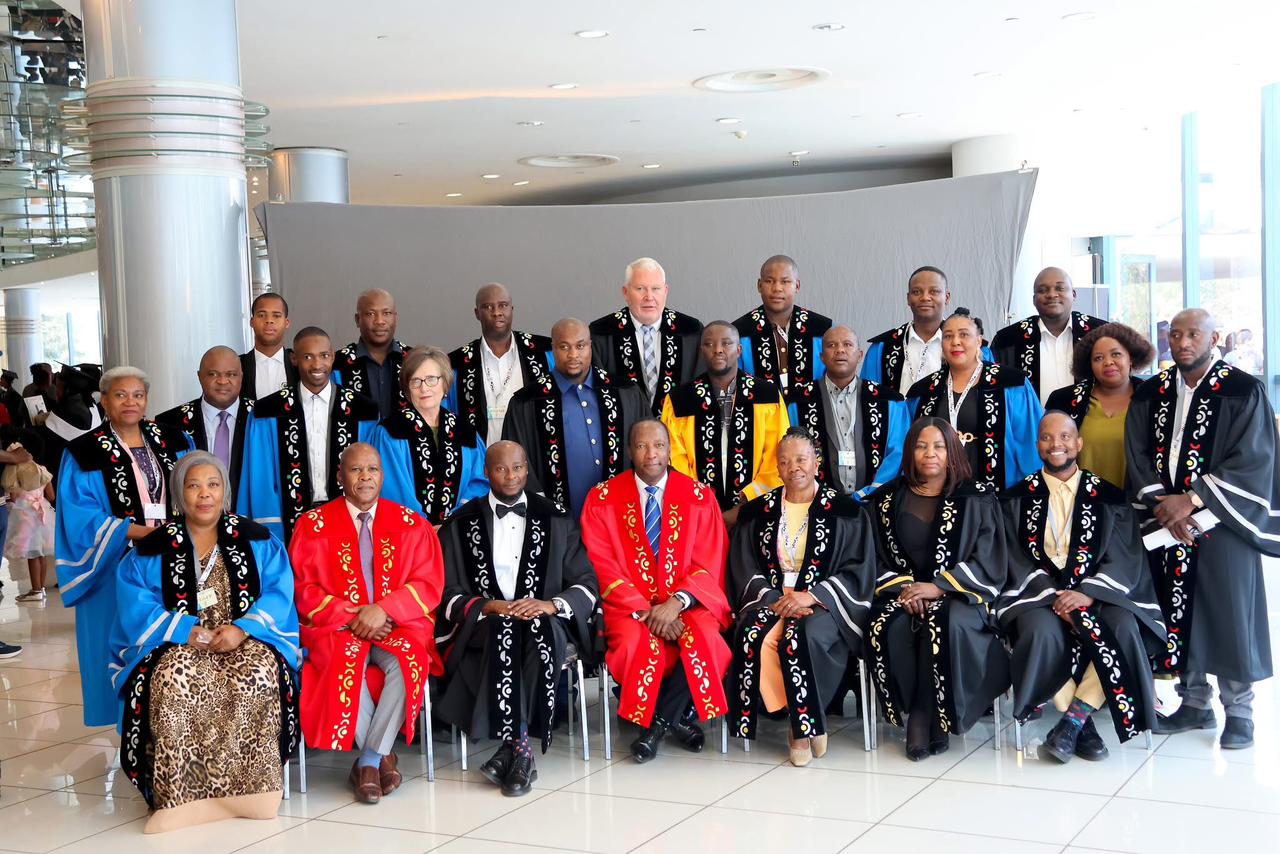
The College Council is pleased to present its governance report for the 2025 reporting period. This report reflects Council’s statutory oversight role in governing Taletso TVET College in accordance with the Continuing Education and Training Colleges Act, No. 16 of 2006, as amended, the College Statute, the Council Charter, approved committee terms of reference, and applicable governance principles. During the year under review, Council continued to provide strategic leadership and oversight over the College’s performance, governance, financial management, audit improvement, academic delivery, human resources, planning, infrastructure, risk management, policy implementation and stakeholder accountability. The 2025 reporting period was marked by continued institutional stabilisation and improvement. Council exercised oversight through its established governance structures, including the Executive Committee, Audit and Risk Committee, Finance and Investment Committee, Human Resources and Remuneration Committee, Planning and Resources Committee, Academic Board and Institutional Student Representative Council. These structures enabled Council to receive, consider and act on reports from Management and to provide direction on matters requiring governance intervention. Council noted progress in the College’s audit improvement journey. The College moved from a disclaimer audit opinion in the previous audit cycle to a qualified audit opinion with findings for the 2025 financial year. While Council recognises that further improvement is required to achieve an unqualified audit opinion, the improved outcome demonstrates progress in audit readiness, leadership oversight, financial reporting, internal controls and management’s responsiveness to audit findings.
Council further monitored the College’s financial sustainability, budget implementation, procurement environment, asset management and implementation of corrective actions arising from the external audit. Particular attention was given to the completeness of the fixed asset register, physical verification of assets, reconciliations, supporting documentation and the strengthening of internal controls. Academic governance remained a priority during the year. Council, through the Academic Board, continued to monitor teaching and learning, examinations, student support, occupational programmes, certification, graduation matters, programme delivery and academic policy implementation. The College remained committed to improving student success, academic quality and responsiveness to skills needs in the communities it serves. In the area of planning and resources, Council monitored the development and alignment of the 2026–2030 Strategic Plan, Annual Performance Plan and Funding Grid. These instruments provide the foundation for the next planning cycle and support stronger alignment between institutional priorities, DHET requirements, available resources and performance targets. Council also exercised oversight over human resource matters, including recruitment, employment equity, performance management, labour relations, staff development, remuneration matters and workforce planning. The filling of critical vacancies, strengthening of employment equity, wage bill monitoring and review of remuneration-related policy gaps remain key priorities. Infrastructure development and maintenance continued to receive Council attention as critical enablers of quality teaching, learning and institutional compliance. Council monitored infrastructure projects, facilities maintenance, ICT requirements, security, campus readiness and resource allocation priorities. Council acknowledges that the College continued to operate in a challenging environment, including financial pressure, audit remediation requirements, infrastructure needs, student funding challenges, capacity constraints and increasing demand for access to quality TVET education. Despite these challenges, Council remains satisfied that governance structures continued to provide oversight and that Management implemented measures to strengthen institutional performance and accountability. Council expresses appreciation to the Minister of Higher Education and Training, the Department of Higher Education and Training, the Auditor-General of South Africa, Council members, committee members, Management, staff, students, organised labour, student leadership and stakeholders for their contribution and support during the reporting period. Council remains committed to ethical leadership, accountability, transparency, good governance and the continued improvement of Taletso TVET College. The focus for 2026 will be to sustain audit improvement, strengthen internal controls, improve performance reporting, support student success, accelerate recruitment, enhance infrastructure implementation and ensure that the College continues to deliver on its mandate.
7.1 Constitution of the College Council and Governance Structures
The governance of Taletso TVET College is vested in the College Council, which serves as the highest decision-making and oversight structure of the institution. Council is responsible for the good order, strategic direction, governance and overall accountability of the College, as required by the Continuing Education and Training Colleges Act, the College Statute and applicable governance frameworks. The College Council exercises its responsibilities through approved governance structures, including Council committees, the Academic Board and the Institutional Student Representative Council. These structures support Council in ensuring that the College is
governed effectively, that institutional risks are monitored, that resources are used responsibly, and that the College remains focused on its core mandate of providing quality technical and vocational education and training.
7.1.1 Statement of Council on Governance
Taletso TVET College remains committed to maintaining high standards of governance, accountability, ethical leadership and responsible stewardship of public resources. Council recognises that effective governance is central to institutional stability, performance improvement, financial sustainability and public confidence. During the 2025 reporting period, Council continued to promote governance practices that support transparency, accountability, fairness, responsibility, ethical conduct and compliance with applicable laws and policies. Council ensured that strategic and operational matters were considered through appropriate governance structures and that decisions were informed by reports from Management and Council committees. Council’s governance approach was guided by the following principles: Governance Principle Council Focus Ethical leadership Promoting integrity, accountability and responsible conduct across governance structures Strategic oversight Monitoring implementation of the Strategic Plan, Annual Performance Plan and institutional priorities Accountability Ensuring that Management reports on performance, risks, finances, audit matters and corrective actions Transparency Supporting proper reporting, decision-making and disclosure through governance structures Compliance Monitoring adherence to legislation, DHET directives, policies and approved governance instruments Risk awareness Ensuring that institutional risks are identified, monitored and escalated appropriately Financial stewardship Overseeing responsible use of public funds and strengthening financial controls Student-centered governance Supporting access, success, student support and academic quality Council continued to require declarations of interest and adherence to confidentiality and ethical conduct requirements in governance meetings. This supported transparency, independence of judgment and responsible decision-making.
7.1.2 Compliance with Laws, Codes, Rules and Standards
Council is accountable for ensuring that the College complies with applicable legislation, regulatory requirements, ethical obligations, internal policies and DHET directives. Oversight over compliance and risk-related matters is exercised primarily through the Audit and Risk Committee, with additional support from other Council committees according to their respective mandates. During the reporting period, the College continued to operate within the framework of the Continuing Education and Training Colleges Act, Public Finance Management Act principles, National Treasury requirements, DHET reporting guidelines, labour legislation, academic quality assurance requirements and institutional policies.
Council monitored compliance through quarterly reports, audit and risk reports, financial reports, academic reports, HR reports, planning reports, policy review processes and audit action plans. Where weaknesses were identified, Management was required to develop and implement corrective actions and report progress to the relevant governance structures. The College continued to strengthen its governance and compliance environment through policy reviews, committee reporting, risk monitoring, internal audit activity, external audit engagement, and improved action tracking.
7.1.3 Composition of the College Council
The composition of the College Council is determined in terms of the Continuing Education and Training Colleges Act, No. 16 of 2006, as amended, and the College Statute. Council comprises external members appointed in accordance with the Act, the Principal, representatives of internal constituencies, student representatives and other categories of membership as provided for in the applicable legislative framework. Council membership provides a mix of skills, experience and stakeholder representation to support effective governance. External members contribute expertise in areas such as governance, finance, audit, human resources, law, education, planning, risk and institutional leadership. Internal and student representatives provide important perspectives on academic, staff and student matters. Council is supported by a governance secretariat responsible for coordinating meetings, records, agendas, minutes, submissions, resolutions and reporting processes. Council Composition against CET Act Requirements (2025 Financial Year) The College Council comprises 14 members for the 2024–2029 term, against the 15 members required in terms of the Continuing Education and Training Colleges Act, No. 16 of 2006, as amended. The table below summarises the Council’s composition against the statutory requirements as at the end of the 2025 financial year. Two positions remained vacant at year-end (Donor Representative and Member: Legal), and the number of independent members stood at three against the required five. Council continues to engage the Department of Higher Education and Training on the filling of the outstanding independent and representative positions.
| Requirement (CET Act) | Required | Current Status | Compliant |
|---|---|---|---|
| Total number of Council members | 15 | 13 | No |
| Independent members (s.10(6)) | 5 | 3 | No |
| Ministerial appointees (s.10(4)) | 5 | 5 | Yes |
| Principal (ex-officio) | 1 | 1 | Yes |
| Academic Board representative | 1 | 1 | Yes |
| SRC representatives | 2 | 2 | Yes |
| Support staff representatives | 2 | 2 | Yes |
Register of Council Members (2024–2029 Term) Council Category / Appointing No Term Committee Allocation Member Designation Authority ExCO; ex-officio on all sub- 1 Mr MZ Nkomo College Principal Ex-officio N/A committees; Council ExCO (Chair); Finance & Dr MG Chairperson 22 May 2024 – 2 Minister Investments; Council Nkagisang (Independent) 21 May 2029 (Chairperson) Deputy Chairperson 22 May 2024 – HR & Remuneration (Deputy 3 Ms NB Nomnga Minister (Independent) 21 May 2029 Chair); Academic Board; ExCO Secretary 22 May 2024 – Audit & Risk (Chair); ExCO; 4 Mr D Nyingwa Minister (Independent) 21 May 2029 Council Planning & Resources (Chair); Member 22 May 2024 – 5 Ms MI Magasa Minister Audit & Risk (Alternate); (Independent) 21 May 2029 Council Member 08 Apr 2025 – HR & Remuneration (Chair); 6 Mr S Kau Council (Independent) 21 May 2029 Audit & Risk; Council Academic Board; Planning & Member 08 Apr 2025 – 7 Dr MR Kgasi Council Resources (Interim (Independent) 21 May 2029 Chair/Deputy); Council ICT Steering (Chair); HR & Member 08 Apr 2025 – 8 Mr A Yona Council Remuneration (Alternate); (Independent) 21 May 2029 Council Finance & Investments (Chair); Mr LG Member 22 May 2024 – 9 Minister Planning & Resources Modisapudi (Independent) 21 May 2029 (Alternate); Council Academic Board 01 Nov 2024 – 10 Mr K Marumo Staff election ICT Steering; Council Representative 21 May 2029 Support Staff 01 Nov 2024 – 11 Mr RA Mokhele Staff election HR & Remuneration; Council Representative 21 May 2029 Mar 2025 – 1 12 Mr B Boyz SRC President ISRC Academic Board; Council academic year Mar 2025 – 1 13 Mr T Mooketsi SRC Secretary ISRC Academic Board; Council academic year Deputy Principal: Ex-officio (non- Ex-officio on ExCO and all sub- 14 Mr M Ramalapa N/A Finance member) committees Donor 15 Vacant Council N/A — Representative 16 Vacant Member (Legal) Council N/A — No Council member was suspended during the 2025 financial year.
7.1.4 Duties of the College Council
Council is responsible for governing the College and ensuring that it fulfils its mandate. During the 2025 reporting period, Council continued to perform its duties through strategic oversight, approval processes, monitoring of institutional performance and consideration of committee reports. Council’s key responsibilities included: Area of Responsibility Council Role Strategic direction Oversight over strategic planning, institutional priorities and the 2026–2030 planning cycle Governance Ensuring effective governance structures, committee functionality and ethical leadership Financial oversight Approval and monitoring of budgets, financial reports, audit matters and financial sustainability Academic oversight Oversight through the Academic Board on academic performance, teaching and learning and student success Risk and audit Monitoring risk management, audit outcomes, audit action plans and internal controls Human resources Oversight over recruitment, employment equity, performance management and workforce planning Infrastructure and resources Monitoring infrastructure projects, facilities, ICT and resource allocation Policy approval Reviewing and approving institutional policies and governance instruments Student support Supporting student access, success, representation, wellbeing and governance participation Compliance Ensuring compliance with applicable legislation, DHET requirements and internal policies Council also ensured that matters requiring approval or escalation were considered through the appropriate governance structures before final decisions were made.
7.1.5 Committees of Council
Council discharged its oversight responsibilities through the following committees and governance structures: Structure High-Level Role Executive Committee Coordinates urgent and strategic matters between Council meetings and considers reports requiring Council attention Audit and Risk Committee Oversees audit readiness, internal controls, risk management, compliance, ethics and
Structure High-Level Role external audit matters Finance and Investment Committee Oversees financial management, budgeting, investments, procurement, NSFAS matters and financial sustainability Human Resources and Remuneration Oversees recruitment, staffing, Committee remuneration, employment equity, labour relations and staff development Planning and Resources Committee Oversees strategic planning, infrastructure, ICT, facilities, resource allocation and institutional readiness Academic Board Oversees academic delivery, examinations, programme performance, student support and academic policy matters Institutional Student Representative Council Represents student interests and supports student participation in governance Each committee operated in accordance with its approved terms of reference and reported to Council through the appropriate reporting channels. The committee system enabled Council to exercise detailed oversight over specialised areas while ensuring that key decisions remained aligned to the College’s overall strategic direction.
7.1.6 Council Functionality and Performance
During 2025, Council and its committees continued to meet and consider matters in line with the governance calendar and institutional reporting cycle. Reports submitted to Council and its committees covered finance, audit, risk, academic performance, human resources, planning, infrastructure, ICT, student support, policy review and management operations. Council noted improvements in governance reporting and committee functionality during the year. Committees provided structured oversight, considered quarterly reports, reviewed risks and corrective actions, and made recommendations to Council. Council also monitored the implementation of resolutions and requested Management to improve reporting discipline, strengthen action tracking and ensure that matters requiring Council decisions were submitted timeously. The governance structures contributed to improved accountability, strengthened audit responsiveness, better planning alignment and enhanced oversight over institutional performance. Summary of Governance Meetings Held in 2025 During the 2025 reporting period, Council exercised its oversight responsibilities through its committees and the Academic Board, which convened in line with the approved governance calendar. The table below summarises the meetings held by each governance structure during the year. A combined Finance and Audit & Risk Committee meeting was held on 27 March 2025 to consider asset disposal, write-offs and related finance and audit matters. Meetings Held in Governance Structure Meeting Dates 2025 Audit & Risk Committee 5 27 Mar; 17 Apr; 10 Jul; 07 Oct; 01 Dec
| Governance Structure | Meetings Held in 2025 | Meeting Dates |
|---|---|---|
| Audit & Risk Committee | 5 | 27 Mar; 17 Apr; 10 Jul; 07 Oct; 01 Dec |
| Finance & Investment Committee | 5 | 27 Mar; 17 Apr; 22 Jul; 08 Oct; 27 Nov |
| Human Resources & Remuneration Committee | 4 | 04 Mar; 21 Jul; 12 Nov; 01 Dec |
| Planning & Resources Committee | 4 | 11 Apr; 24 Jul; 13 Oct; 24 Nov |
| Academic Board | 4 | 28 Mar; 25 Jul; 09 Oct; 28 Nov |
7.1.7 Council Oversight on Risk Assessment and Risk Management
Council, through the Audit and Risk Committee, remained ultimately responsible for the governance of risk. Risk management was monitored through institutional risk registers, audit reports, internal control reviews and management reports. During the 2025 reporting period, Council monitored key risks relating to financial sustainability, asset management, procurement, audit readiness, infrastructure, ICT governance, human resources, academic performance, student support, occupational programme readiness, health and safety, and compliance. Management was required to implement mitigation actions and report progress to the relevant governance structures. The Audit and Risk Committee continued to monitor risk registers, audit action plans and internal control matters to ensure that risks were appropriately managed and escalated where necessary.
7.1.8 Fiduciary Mandate of the College Council
Council remained committed to exercising its fiduciary responsibilities with care, skill, diligence, integrity and loyalty to the College. Council members are required to act in the best interests of the institution and to support decisions that advance the College’s mandate, sustainability and public accountability. Council continued to promote the responsible use of public resources, ethical conduct, confidentiality, declaration of interests and compliance with governance requirements. Through its oversight role, Council sought to ensure that the College remains financially responsible, academically responsive, legally compliant and accountable to students, staff, stakeholders, DHET and the public.
7.1.9 Conclusion
During the 2025 reporting period, the College Council continued to provide oversight over the strategic, financial, academic, human resource, planning, infrastructure, risk and governance affairs of Taletso TVET College. Council acknowledges the progress achieved in stabilising governance structures, improving audit outcomes, strengthening planning processes, monitoring institutional risks and supporting student-centred service delivery. Council also recognises that continued effort is required to strengthen internal controls, address audit findings, improve resource alignment, enhance performance monitoring and sustain institutional improvement. Council remains committed to good governance, accountability, ethical leadership and the continued development of Taletso TVET College as a responsive and sustainable public TVET institution.
7.2 Reports by Committees of Council
This section sets out the narrative reports on the activities and performance of the Committees of Council during the year under review, including the Human Resources and Remuneration Committee, Planning and Resources Committee, Audit and Risk Committee, and Finance and Investment Committee.
I. Human Resources and Remuneration Committee Report
Mandate and Purpose. The Human Resources and Remuneration Committee provided oversight over human resource governance, staff establishment, recruitment, remuneration, employment equity, performance management, labour relations, training and development, employee benefits, and compliance with applicable labour legislation and institutional policies. The Committee played a key role in ensuring that the College’s human resource practices remained fair, transparent, compliant and aligned to the strategic objectives of the institution. Its oversight included monitoring workforce planning, recruitment progress, staff development, remuneration-related matters, implementation of collective agreements, and the management of labour relations risks. The Committee reports to Council through the relevant governance structures and provides recommendations on human resource and remuneration matters requiring Council consideration or approval.
Committee Composition. Chairperson: Mr P S Kau (External member). Deputy Chairperson: Ms N B Nomnga (External member). Ex-officio Member: Mr M Z Nkomo (College Principal). Invitees: Mr W Mailula (Senior Management representative), Mr S Mophaki (Labour relations support), Mr R Mokhele (Management support). Ex-officio / Standing Invitee: Mr M Ramalapa (Deputy Principal: Corporate Services).
Meetings Held. Four ordinary meetings, all with quorum above 50%: 04 March 2025 (HR governance, staffing, labour relations); 21 July 2025 (recruitment progress, HR compliance, employment equity, staff development); 12 November 2025 (remuneration, vacancies, performance management, labour relations); 01 December 2025 (annual reporting inputs, HR risks, resolutions and recommendations to Council).
Date Nature of Meeting Quorum Status Key Focus committee oversight matters 21 July 2025 Ordinary meeting More than 50% Recruitment progress, HR compliance, employment equity and staff development 12 November 2025 Ordinary meeting More than 50% Remuneration matters, vacancies, performance management and labour relations 01 December 2025 Ordinary meeting More than 50% Annual reporting inputs, HR risks, resolutions and recommendations to Council Key Areas of Oversight During the 2025 reporting period, the Committee exercised oversight over the following key human resource areas: Oversight Area High-Level Focus Human Resource Strategy and Planning Monitoring alignment of HR planning to the College’s strategic priorities, budget and Annual Performance Plan Workforce Planning Evaluating short- and long-term staffing requirements to support teaching, learning and administrative functions Staff Establishment Advising on the appropriateness of the College staff establishment and prioritisation of critical posts Organisational Structure Reviewing organisational structure matters and recommending changes where required Recruitment and Vacancies Monitoring recruitment progress, critical vacancies and appointment processes Remuneration and Compensation Considering salary, wage bill, benefits, overtime and remuneration-related policy matters Performance Management Monitoring performance appraisal processes and staff development needs Labour Relations Monitoring labour relations matters, grievances, disciplinary processes and implementation of collective agreements Employment Equity and Transformation Supporting compliance with the Employment Equity Act and monitoring progress on representation targets Training and Development Monitoring staff development, bursary support, capacity building and skills development initiatives Employee Exits Noting resignations, retirements, expiry of fixed- term contracts and deaths in service High-Level Report The Human Resources and Remuneration Committee met during the year to consider key HR governance matters affecting institutional stability, staff capacity, remuneration, labour relations and
compliance. The Committee noted that the College continued to experience pressure in relation to vacancies, recruitment turnaround times, employment equity representation, staff development funding, remuneration disparities and workforce planning. Management reported progress in recruitment planning and confirmed that posts up to salary level 8, which fall within the College’s delegated authority, were targeted for filling by the end of June 2026. The Committee resolved that Management should continue implementing and monitoring the recruitment action plan and report progress at subsequent meetings, with emphasis on substantial completion of salary levels 5 to 8. The Committee also monitored labour relations developments and encouraged Management to strengthen communication, promote proper lodging of grievances, and maintain sound labour relations practices. In respect of employment equity, the Committee emphasised that recruitment advertising should, where lawful and appropriate, support employment equity objectives and broaden representation among under-represented groups. Performance appraisal implementation was noted, and the Committee expressed appreciation for progress made by Management. Staff development also received attention, including support for staff studies, bursary processes and capacity-building initiatives. The Committee further noted that 27 lecturers were expected to graduate through Vaal University of Technology, reflecting progress in staff academic development. Key Matters Considered The Committee considered the following key matters during the reporting period: Key Matter High-Level Summary Staff establishment and vacancies The Committee monitored recruitment progress and emphasised implementation of the recruitment action plan. Recruitment of critical posts Critical vacancies and delays in recruitment were identified as operational risks requiring continued monitoring. Labour relations Management was encouraged to strengthen communication and promote proper grievance procedures. Employment equity The Committee supported recruitment practices that advance lawful employment equity objectives and representation. Employee exits Retirements, resignations, expiry of fixed-term contracts and the deaths of two officials were noted. Performance appraisals Progress on performance appraisal implementation was noted and encouraged. Training and development Staff development initiatives, study support and lecturer development were considered. Payroll and wage bill The current wage bill trajectory and impact on the operational budget were discussed. Overtime management Overtime was recognised as necessary in some operational circumstances but requiring stronger controls. Employee benefits Disparities between PERSAL-paid employees and College-paid employees were noted for review. Acting and lateral duties remuneration A policy gap was identified where employees perform acting or lateral duties without appropriate compensation. Fixed-term contracts The extensive use of fixed-term contracts for functional roles was identified as a continuity and legal risk.
Decisions, Recommendations and Resolutions Key Discussion / No. Item Recommendation Committee Outcome 1 Recruitment and Management to Progress to be vacancies implement and monitored and monitor the reported at recruitment action subsequent plan, with focus on meetings. filling delegated posts up to salary level 8. 2 Payroll and wage bill The Committee Supported and noted the wage bill escalated to Council trajectory and its for consideration. impact on the operational budget. Management proposed cost- containment measures, stronger workforce planning and regular payroll audits. 3 Overtime Overtime was noted Supported. Pre- as necessary in approval should be some operational mandatory except in circumstances, but justified stricter pre- emergencies. authorization, monitoring controls and alternative operational arrangements were recommended. 4 Employee benefits The Committee Supported and noted disparities escalated to Council between PERSAL- for consideration. paid and College- paid employees, including the 37% allowance for College-paid employees. An independent review and benchmarking exercise was recommended. 5 Acting and lateral A policy gap was Supported and duties remuneration identified where escalated to Council employees acting in for consideration. lateral positions or absorbing additional duties may not be compensated. A benchmarking and remuneration policy review was proposed. 6 Fixed-term contracts Management Supported and highlighted escalated to Council institutional for consideration. instability, continuity
Key Discussion / No. Item Recommendation Committee Outcome risk and legal exposure arising from extensive use of fixed-term contracts for functional roles. A comprehensive audit and phased plan to absorb permanent- nature roles into the establishment was proposed. 7 Staff development Delayed staff Progress noted and and bursary support development and further reporting bursary support were requested. identified as risks. Management reported that applications for study support had been opened and that a committee process was underway to evaluate submissions. 8 Labour relations Management was Supported for encouraged to continued strengthen implementation. communication, encourage proper lodging of grievances and maintain sound labour relations practices. 9 Employment equity Recruitment Supported for advertising should, implementation and where lawful and monitoring. appropriate, support employment equity objectives and broaden representation across under- represented groups. Achievements During the Reporting Year The Committee noted progress in several HR governance areas during the reporting period. Recruitment planning was strengthened through the identification of critical posts and the development of a recruitment action plan. The Committee also noted progress in performance appraisal implementation and acknowledged Management’s efforts in this regard. The College continued to invest in staff development, with 27 lecturers expected to graduate through Vaal University of Technology. This contributed positively to institutional capacity building and academic staff development. The Committee welcomed the progress and encouraged continued investment in staff development. The Committee also strengthened oversight over remuneration and workforce sustainability matters by considering the wage bill, overtime controls, employee benefits, acting and lateral duties, and the use of fixed-term contracts. These discussions provided a platform for Council-level consideration of systemic HR risks requiring policy and strategic intervention.
Challenges and Risks The Committee noted the following key challenges and risks: Risk / Challenge High-Level Explanation Critical vacancies Vacancies continued to affect institutional capacity and operational effectiveness. Recruitment delays Delays in recruitment remained a risk, particularly where processes depended on Head Office responsibilities or external approvals. Budget constraints Budget limitations affected the pace of recruitment, staff development and workforce expansion. Delayed staff development support Bursary and study support processes required closer monitoring to ensure timely implementation. Wage bill pressure The wage bill trajectory required careful monitoring to protect financial sustainability. Overtime controls Overtime required stronger pre-approval and monitoring to prevent uncontrolled expenditure. Employee benefit disparities Differences between PERSAL-paid and College- paid employee benefits required independent review and benchmarking. Acting and lateral duties A policy gap existed regarding remuneration for employees performing additional or lateral duties. Fixed-term contracts Extensive use of fixed-term contracts for functional roles posed continuity, stability and legal risks. Employment equity Representation and transformation targets required continued monitoring through recruitment and workforce planning. Labour relations Communication and grievance management remained important for maintaining workplace stability. Corrective Actions and Priorities Management was required to implement corrective actions to address HR risks and strengthen workforce governance. The Committee will monitor progress against the following actions: Corrective Action Responsible Area Priority Implement and monitor the HR / Management High recruitment action plan Prioritise filling of delegated HR / Management High posts up to salary level 8 Strengthen workforce planning HR / Executive Management High and post prioritisation Conduct regular payroll and HR / Finance / Management High wage bill monitoring Introduce stricter overtime pre- HR / Line Managers / Finance High approval and monitoring controls Review employee benefit HR / Finance / Council High disparities through independent benchmarking Review policy gaps on acting HR / Management / Council Medium to High and lateral duties remuneration Audit fixed-term contracts and HR / Management / Council High
Corrective Action Responsible Area Priority develop a phased absorption plan for permanent-nature roles Strengthen employment equity HR / Employment Equity High monitoring in recruitment Committee processes Improve staff development and HR / Skills Development Medium to High bursary support processes Committee Strengthen communication and HR / Labour Relations Medium grievance management Improve quarterly HR reporting HR / Secretariat Medium to the Committee and Council Priorities for 2026 In 2026, the Committee will prioritise the filling of critical vacancies, implementation of the recruitment action plan, improved workforce planning, strengthened employment equity outcomes, wage bill monitoring, and review of remuneration-related policy gaps. The Committee will also focus on improved controls over overtime, review of employee benefits, management of fixed-term contract risks, strengthening of performance management, implementation of staff development initiatives, and improved labour relations governance. A key focus for the year ahead will be ensuring that HR practices support institutional stability, continuity, compliance, transformation and improved service delivery across the College. Conclusion Based on the information and evidence considered during the 2025 reporting period, the Human Resources and Remuneration Committee discharged its oversight responsibilities in relation to human resource governance, remuneration, staffing, labour relations, employment equity and staff development. The Committee noted progress in recruitment planning, performance management and staff development, while also identifying significant risks requiring continued management and Council attention. These include vacancies, wage bill pressures, overtime controls, employee benefit disparities, fixed-term contract risks and remuneration policy gaps. The Committee will continue to monitor implementation of corrective actions and provide recommendations to Council to strengthen human resource governance and institutional sustainability. Committee Chairperson Mr SP Kau ii. Planning and Resources Committee Report Mandate and Purpose The Planning and Resources Committee provided oversight over institutional planning, resource allocation, infrastructure development, ICT infrastructure, facilities management, strategic projects, occupational health and safety, and alignment of institutional resources to the College’s strategic priorities. The Committee supported Council by monitoring progress against planning priorities, reviewing infrastructure and resource-related reports, and ensuring that planning processes were aligned to the College’s Strategic Plan, Annual Performance Plan, DHET requirements and broader institutional development objectives.
Committee Composition Category Name / Position Ms MI Magasa / Dr Chairperson MR Kgasi Member Mr L Modisapudi Principal / Ex-officio Member Mr MZ Nkomo MIS / Planning Support Mr L Letlhake Infrastructure Support/ Secretary Ms A Sehole Deputy Principal: Finance / CFO, Mr M Ramalapa Meetings Held Venue / Quarter Date Key Focus Mode Virtual / Strategic planning, resource allocation and committee Q1 11 April 2025 Teams oversight role Virtual / Planning activities, infrastructure progress and institutional Q2 24 July 2025 Teams performance matters Committee 13 October Strategic planning, resources, infrastructure and management Q3 Reporting 2025 reporting Cycle 24 November Virtual / Institutional Maturity Model, QCTO readiness, SCM oversight Q4 2025 Teams and infrastructure monitoring Key Areas of Oversight Oversight Area High-Level Focus Monitoring implementation of the College Strategic Plan and planning Strategic planning cycle Oversight over APP alignment, performance targets and DHET Annual performance planning planning requirements Ensuring that financial, human, ICT and infrastructure resources Resource allocation support institutional priorities Monitoring capital projects, maintenance, security upgrades and Infrastructure development campus infrastructure needs Supporting institutional readiness through improved ICT planning and ICT infrastructure resource alignment Monitoring preparation of evidence and readiness for DHET Institutional Maturity Model assessment processes QCTO Oversight over readiness for occupational programme readiness implementation and related infrastructure needs Facilities and Monitoring repairs, maintenance backlogs and campus- maintenance level facilities support Risk and Monitoring planning and infrastructure-related risks and compliance corrective actions High-Level Report During the 2025 reporting period, the Planning and Resources Committee continued to provide oversight over institutional planning, infrastructure development, resource allocation and readiness for future academic and operational requirements. The Committee monitored progress on the development and alignment of the 2026–2030 Strategic Plan, Annual Performance Plan and Funding Grid. These planning documents were reviewed in line with DHET requirements and institutional priorities to support improved performance monitoring and accountability.
The Committee also considered progress on infrastructure projects, maintenance needs, occupational programme readiness, ICT-related requirements and resource allocation priorities. Attention was given to ensuring that infrastructure and resources support teaching and learning, student support, occupational programmes, campus operations and institutional compliance. A key area of focus during the year was preparation for the DHET Institutional Maturity Model process. The Committee monitored the consolidation of planning, governance and performance evidence to support the College’s readiness for assessment and improvement. Key Achievements During the Reporting Year Achievement Summary The College advanced the development and alignment of the Strategic Progress on the 2026–2030 Plan, Annual Performance Plan and Funding Grid for the next planning planning cycle cycle. Alignment with DHET Planning documents were reviewed and refined in response to DHET requirements planning expectations and institutional priorities. The Committee supported stronger alignment between strategic Improved planning planning, performance reporting, resource allocation and institutional coordination governance. Institutional Maturity Model Evidence was consolidated to support the College’s preparation for the readiness DHET Institutional Maturity Model assessment process. Infrastructure monitoring The Committee monitored progress on key infrastructure, maintenance strengthened and campus-related projects. Support for occupational Oversight was provided on infrastructure and resource requirements programme readiness linked to QCTO and occupational programme implementation. Improved resource The Committee promoted better alignment between institutional alignment priorities, available resources and operational needs. Campus infrastructure Campus-level facilities, maintenance and operational resource needs considered requirements were considered through the committee reporting process. Governance reporting Planning and infrastructure matters were escalated through formal improved committee structures for Council oversight. Key Matters Considered The Committee considered the following key matters during the reporting period: Key Matter High-Level Summary Strategic Plan 2026–Review and alignment of the College’s medium-term strategic planning 2030 framework. Annual Performance Monitoring alignment of targets, indicators and resource requirements. Plan Consideration of funding alignment to strategic priorities and DHET Funding Grid expectations. Monitoring progress on campus infrastructure, maintenance and capital Infrastructure projects projects. Institutional Maturity Preparation of evidence and readiness for DHET review processes. Model Consideration of occupational programme readiness, including staffing, QCTO readiness infrastructure and equipment implications. Consideration of ICT infrastructure as an enabler of teaching, learning and ICT requirements administration. Resource allocation Review of institutional resource needs and alignment to operational priorities. Monitoring risks relating to infrastructure, planning implementation and Risk matters institutional readiness. Decisions, Recommendations and Resolutions
No. Item Key Discussion / Recommendation Committee Outcome The Committee supported continued Recommended for continued Strategic 1 refinement and alignment of the Strategic monitoring and submission planning Plan, APP and Funding Grid. through governance structures. Management was encouraged to ensure that DHET planning 2 planning documents respond to DHET Supported. requirements feedback and institutional priorities. Evidence preparation and coordination were Institutional Progress noted and further 3 prioritised to support readiness for DHET Maturity Model monitoring required. assessment. Management was required to continue Infrastructure 4 monitoring infrastructure projects and report Supported. monitoring progress to the Committee. Resource and infrastructure needs for Supported for ongoing 5 QCTO readiness occupational programmes were identified as monitoring. a priority area. The Committee encouraged alignment of Resource 6 resources to teaching, learning, compliance Supported. allocation and institutional development priorities. Planning and infrastructure-related risks were Risk 7 to be monitored through existing reporting Supported. management structures. Challenges and Risks The Committee noted that some infrastructure and resource-related matters required continued monitoring. These included delays in certain infrastructure projects, readiness requirements for occupational programmes, and the need to ensure that resources are aligned to strategic priorities. The Committee also noted the importance of strengthening coordination between planning, finance, infrastructure, academic divisions and campuses to ensure that institutional priorities are implemented effectively. Corrective Actions and Priorities Corrective Action Responsible Area Priority Continue monitoring implementation of the Strategic Plan, Planning / Management High APP and Funding Grid Finalise and maintain evidence for the Institutional Planning / Governance / High Maturity Model process Management Improve coordination between planning, finance, Management High infrastructure and academic units Monitor infrastructure project progress and escalate Infrastructure / Management High delays where required Align resource allocation to teaching, learning and Management / Finance / High compliance priorities Planning Academic / Planning / Medium to Support QCTO and occupational programme readiness Infrastructure High Strengthen quarterly reporting on planning and Planning / Secretariat Medium infrastructure matters Priorities for 2026 The Committee will focus on implementation of the 2026–2030 planning cycle, and commence with the 2027 planning cycle, improved infrastructure delivery, alignment of resources to strategic priorities, institutional maturity improvement, occupational programme readiness & implementation in quarter 3. The Committee will continue to monitor infrastructure development, facilities maintenance, ICT requirements, QCTO readiness and preparation for institutional maturity assessments. Emphasis will also be placed on improving coordination between planning, finance, academic delivery, infrastructure and campus operations.
Conclusion During the 2025 reporting period, the Planning and Resources Committee contributed to strengthening institutional planning, resource alignment, infrastructure oversight and readiness for future academic and operational requirements. The Committee supported progress on the 2026–2030 Strategic Plan, Annual Performance Plan, Funding Grid, Institutional Maturity Model readiness, infrastructure monitoring and occupational programme readiness. These achievements strengthened the College’s planning environment and provided a basis for improved implementation and accountability in the next reporting cycle. Committee Chairperson Dr MR Kgasi iii. Audit and Risk Committee Report Mandate and Purpose The Audit and Risk Committee provided independent oversight and assurance over the effectiveness of the College’s system of internal control, risk management, governance processes, financial reporting, compliance, ethics, audit readiness, and both internal and external audit activities. During the 2025 reporting period, the Committee played a pivotal role in strengthening governance and financial management practices across the College. Through its oversight, monitoring, and advisory functions, the Committee supported management in addressing key control deficiencies, enhancing audit readiness, and improving the quality of financial reporting. These interventions contributed significantly to the College’s progression from a disclaimer audit opinion in the previous reporting period to a qualified audit opinion with findings in 2025, reflecting a measurable improvement in the control environment, financial governance, and accountability framework of the institution. Committee Composition Category Name / Position Chairperson Mr D Nyingwa Member Ms N Nomnga (prior reconfiguration of committees) Deputy Chairperson/Member Mr S Kau Invitee Mr A Yona Internal Auditor/Secretary Mr T Makhaya Principal / Ex-officio Invitee Mr MZ Nkomo Deputy Principal: Finance / CFO Mr M Ramalapa Independent external members Ms F Nchabeleng, Mr R Tshimomola Meetings Held Quarter Date Venue / Mode Key Focus Q1 17 April 2025 Virtual Internal controls, audit matters, risk and financial oversight Special / Joint 27 March 2025 Combined Finance Asset disposal, write-offs, finance and ARC meeting and audit-related matters
Quarter Date Venue / Mode Key Focus Q2 10 July 2025 Virtual Internal audit plan, risk management, and audit action tracking Q3 7 October 2025 Hybrid / Teams Financial reporting, internal and external audit progress, risk and fraud management Q4 1 December Committee reporting Q4 ARC report to Council and year- 2025 cycle end audit-readiness matters High-Level Report During the 2025 financial year, the Audit and Risk Committee continued to discharge its statutory and governance responsibilities by providing independent oversight over the College’s system of internal control, risk management, governance processes, audit readiness, compliance, and financial reporting. The Committee remained focused on promoting accountability, transparency, sound financial management, and the continuous strengthening of the College’s governance environment. In executing its mandate, the Committee reviewed and considered the Annual Financial Statements for the year ended 31 December 2025, the Auditor-General’s audit report, management reports, audit findings, management responses, and the associated corrective-action plans developed to address identified deficiencies. The Committee further monitored the implementation of audit action plans and received regular progress reports from management, internal audit, and other assurance providers to ensure that corrective measures were effectively implemented and sustained. The Committee noted with satisfaction the significant improvement in the College’s audit outcome, with the institution progressing from a disclaimer of opinion in the previous audit cycle to a qualified audit opinion with findings for the 2025 financial year. This represents a substantial milestone in the College’s journey towards improved financial governance and demonstrates measurable progress in strengthening the control environment, enhancing financial reporting processes, improving record management, and fostering greater accountability across the institution. The improved audit outcome reflects the collective efforts of Council, Management, Internal Audit, the Audit and Risk Committee, and other assurance providers in driving a coordinated programme of governance reform and audit readiness. The Committee acknowledges the commitment demonstrated by management in addressing historical audit findings and implementing corrective measures aimed at improving the reliability and credibility of financial information. Notwithstanding the progress achieved, the Committee noted that the basis for the qualified audit opinion related primarily to Property, Plant and Equipment. The Auditor-General reported that certain assets were not fully and accurately recorded in the fixed asset register in accordance with the requirements of GRAP 17: Property, Plant and Equipment, resulting in an understatement of the reported asset balance. The Committee therefore placed particular emphasis on strengthening asset management practices through enhanced asset verification processes, improved maintenance of the fixed asset register, reconciliation of supporting documentation, validation of asset records, and the implementation of robust controls to ensure the completeness and accuracy of asset information. The Committee further noted the restatement of corresponding figures for the 2024 financial year as a result of prior-period errors identified during the preparation and audit of the 2025 Annual Financial Statements. While the restatements were appropriately accounted for in accordance with applicable accounting standards, they underscored the importance of maintaining strong financial disciplines, effective reconciliations, accurate record keeping, and rigorous quality assurance processes throughout the financial reporting cycle. In response to the matters raised by the Auditor-General, the Committee directed management to continue implementing sustainable corrective actions aimed at addressing the root causes of audit findings and preventing their recurrence. Particular attention will continue to be given to asset management, financial reporting processes, supporting documentation, record management, compliance monitoring, and the strengthening of preventative and detective controls.
The Committee remains committed to supporting the College’s pursuit of clean administration and improved governance outcomes. Through ongoing oversight, monitoring, and engagement with management and assurance providers, the Committee will continue to promote a culture of accountability, ethical leadership, sound risk management, and continuous improvement in the College’s financial and governance practices. Key Areas of Oversight The Committee focused on the following key areas during the reporting period: Oversight Area High-Level Focus External audit outcome Review of the Auditor-General’s audit report, management report, audit opinion and key findings Annual Financial Statements Review of corrected and uncorrected misstatements, restatements, disclosures and audit readiness Asset management Completeness of the fixed asset register, GRAP 17 compliance and physical verification of assets Internal controls Monitoring weaknesses in processing, reconciliation, record keeping and financial reporting Risk management Oversight of institutional risk registers, mitigation plans, fraud risk and governance risks Internal audit Consideration of internal audit work, assurance reports and responsiveness by management Compliance Review of compliance with the CET Act, financial reporting requirements and governance obligations Procurement and contract management Oversight of procurement-related risks, conflict-of- interest considerations and SCM control environment Going concern Consideration of the College’s financial health and sustainability indicators Key Achievements The Committee noted the following achievements during the 2025 reporting period: Achievement Summary Improved audit outcome The improvement from a disclaimer audit opinion to a qualified audit opinion demonstrates the College’s commitment to strengthening governance, enhancing financial reporting processes, improving internal controls, and fostering greater accountability across the institution. Strengthened audit engagement The Committee noted a marked improvement in the quality of engagement between Management, the Audit and Risk Committee, and the Auditor-General of South Africa (AGSA). This strengthened collaboration facilitated the timely identification and resolution of audit matters, enhanced accountability, and contributed positively to the overall audit process. Going concern confirmed Based on the information reviewed, the Committee is satisfied that no material uncertainty exists regarding the College’s ability to continue as a going concern for the foreseeable future. Improved financial health assessment The Auditor-General concluded that the College’s financial health was good, representing an improvement from the prior year. No significant IT security deficiencies No significant deficiencies were identified in IT security reported controls during the audit. No procurement and contract The Auditor-General of South Africa (AGSA) did not identify management findings reported any findings relating to procurement and contract management during the audit. This reflects an improvement
Achievement Summary with applicable legislation and policies, and oversight of contract management processes. Internal audit contribution recognised The internal audit function was recognised as contributing to strengthening the control environment and supporting risk identification. Accountability ecosystem improved The audit report recognised that governance structures, management practices and oversight committees were increasingly aligned. Challenges and Risks While the Committee welcomed the significant improvement in the audit outcome, it recognised that further work remains necessary to strengthen the College’s control environment and sustain progress achieved during the year. The Committee noted that the primary area requiring continued management attention relates to asset management processes, particularly the completeness and accuracy of the fixed asset register. The qualification on property, plant and equipment highlighted the importance of ongoing asset verification, timely recording of assets, maintenance of supporting documentation, and strengthening controls over asset management. The Committee further observed opportunities to enhance the effectiveness of daily and monthly transaction processing, reconciliations, and financial review processes. Continued improvements in these areas will contribute to the accuracy and reliability of financial information and support the preparation of high-quality Annual Financial Statements. The Committee noted positively that management addressed a number of material matters during the audit process, demonstrating a commitment to corrective action and continuous improvement. In addition, the Committee will continue to monitor key risk areas including debt management, creditor payment cycles, cash flow management, impairment assessments, record keeping, quality assurance over financial reporting, and the timely submission of annual reporting information. Focused attention on these areas will further strengthen governance, financial sustainability, and audit readiness across the College. Corrective Actions and Priorities The Committee will continue to monitor the implementation of the following corrective actions: Corrective Action Responsible Area Priority Complete and maintain a Finance / Asset Management High GRAP-compliant fixed asset register Strengthen controls over Finance / Asset Management / High physical verification of assets Campuses Improve daily and monthly Finance High reconciliations Strengthen quality review of Finance / Management / ARC High Annual Financial Statements before submission Improve record keeping and All departments High audit evidence management Monitor implementation of audit Management / Internal Audit / High action plans ARC Strengthen debt management Finance High and impairment monitoring Improve creditor payment Finance / SCM Medium to High turnaround time Maintain regular engagement Management / ARC Medium Continue monitoring risk, ethics Risk / Internal Audit / ARC Medium and internal audit reports
Priorities for 2026 Building on the significant progress achieved during the 2025 financial year, the Audit and Risk Committee remains committed to supporting the College’s continued journey towards achieving an unqualified audit opinion and strengthening its overall governance, accountability and financial management environment. The Committee is encouraged by the improvements already demonstrated in financial reporting, audit readiness, governance coordination and management responsiveness, and views these achievements as a strong foundation for further advancement. During 2026, the Committee will place particular emphasis on enhancing the completeness, accuracy and reliability of the fixed asset register through ongoing verification processes, strengthened asset management practices, improved record keeping and continuous monitoring of asset-related controls. This focus will contribute to greater confidence in the integrity of the College’s financial information and support compliance with applicable accounting standards and reporting requirements. The Committee will continue to oversee initiatives aimed at strengthening financial discipline through improved monthly and year-end reconciliations, enhanced financial review processes and robust quality assurance mechanisms for the preparation of Annual Financial Statements. Particular attention will be given to ensuring that financial information is supported by accurate records, reviewed timeously and subjected to appropriate management oversight before submission for audit purposes. Furthermore, the Committee will actively monitor the implementation of management action plans arising from both internal and external audit processes. Through regular progress reviews and accountability measures, the Committee will support management in addressing identified control weaknesses and embedding sustainable corrective actions across the institution. This approach is intended not only to resolve historical findings but also to prevent the recurrence of similar issues in future reporting periods. The Committee also recognises the importance of maintaining a sound financial position and will continue to oversee improvements in debt management, creditor administration, cash flow monitoring and revenue management processes. Strengthening these areas will contribute to improved operational efficiency, financial sustainability and enhanced stewardship of public resources. In support of good governance, the Committee will continue to promote a strong culture of accountability, ethical leadership, transparency and compliance throughout the College. Oversight of enterprise risk management will remain a key priority, ensuring that strategic, operational, financial and compliance risks are proactively identified, assessed and managed. The Committee will also continue to support a responsive and value-adding internal audit function that provides independent assurance and practical recommendations for continuous improvement. The constructive and collaborative relationship established between the College, Internal Audit, the Audit and Risk Committee and the Auditor-General will remain a critical success factor during 2026. Continued engagement, open communication and proactive resolution of audit matters will assist the College in maintaining audit readiness throughout the year and further strengthening its governance framework. The Committee is confident that the collective efforts of Council, Management, Internal Audit, employees and other stakeholders will continue to build on the momentum achieved during 2025. The objective for 2026 is not only to improve the audit outcome but also to embed a culture of excellence in governance, financial management and accountability that will support the long-term sustainability, credibility and strategic success of the College. Through sustained commitment to continuous improvement, the College is well positioned to achieve reliable, transparent and high-quality financial reporting that inspires confidence among stakeholders and demonstrates responsible stewardship of public resources. Committee Chairperson Mr D Nyingwa
v. Finance and Investment Committee Report Mandate and Purpose The Finance and Investment Committee provided strategic oversight and governance assurance over the College’s financial management, budgeting, expenditure control, investment management, supply chain management, asset management, NSFAS funding administration, financial reporting, and long- term financial sustainability. Throughout the 2025 financial year, the Committee played an instrumental role in strengthening financial governance, monitoring budget performance, safeguarding the College’s financial resources, and promoting sound financial decision-making. The Committee closely monitored the implementation of the approved budget, reviewed financial performance reports, assessed investment strategies and cash flow management, and provided oversight on procurement and expenditure trends to ensure alignment with legislative and policy requirements. Particular attention was given to enhancing financial discipline, improving operational efficiency, and supporting the effective utilisation of resources in pursuit of the College’s strategic objectives. In addition, the Committee maintained focused oversight of audit readiness initiatives and management’s implementation of corrective actions arising from both internal and external audit processes. Through regular engagement with management, the Committee monitored progress on addressing audit findings, strengthening internal controls, improving financial reporting processes, and enhancing accountability across the institution. The Committee also provided oversight on asset management practices, NSFAS funding administration, debt management, and investment performance, while continuously assessing the College’s financial position and sustainability. These efforts contributed to improved governance, stronger financial stewardship, and the College’s ongoing commitment to achieving sound financial management and improved audit outcomes. Committee Composition Category Name / Position Chairperson Mr L Modisapudi Deputy Chairperson Dr MG Nkagisang Principal / Ex-officio Member Mr MZ Nkomo Deputy Principal: Finance / CFO Mr M Ramalapa Finance Manager/Secretary Mr T Makhaya (prior reconfiguration) Mr JC Khumalo Supply Chain Management Support Mr T Makhaya (prior reconfiguration) Mr M Magaga Asset Management Support Asset management officials as invited Meetings Held Quarter Date Venue / Mode Key Focus Special / Joint 27 March 2025 Combined Finance Asset disposal, write-offs, and ARC meeting and finance-related matters Q1 17 April 2025 Virtual / Teams Q1 finance report, budget and expenditure oversight Q2 22 July 2025 Committee meeting Q2 finance report and financial management matters Q3 8 October 2025 Hybrid / Teams Finance and investment reporting, procurement, debt, NSFAS, and investment matters Q4 27 November 2025 Hybrid / Teams 2026 budget, investment matters, procurement and
Quarter Date Venue / Mode Key Focus year-end finance reporting High-Level Report During the 2025 reporting period, the Finance and Investment Committee exercised comprehensive oversight of the College’s financial management and sustainability. The Committee continuously monitored financial performance, cash flow management, investment activities, revenue generation, expenditure patterns, procurement processes, NSFAS funding administration, capital expenditure programmes, asset management, and financial reporting readiness. Through its oversight responsibilities, the Committee sought to ensure that the College maintained sound financial governance, safeguarded public resources, and remained well positioned to support its strategic and operational objectives. The Committee was encouraged by the overall financial position of the College, which remained stable and resilient throughout the year despite a challenging economic environment and increasing operational pressures within the higher education and training sector. At year-end, the College reported total assets of approximately R470.6 million and net assets of approximately R424.6 million, reflecting a strong asset base and a solid financial foundation from which the institution can continue to deliver on its mandate. Cash and cash equivalents remained strong at approximately R180.6 million, providing the College with sufficient liquidity to meet its operational commitments and strategic priorities. While the cash balance decreased compared to the previous financial year, the Committee viewed this within the context of the College’s ongoing investment in service delivery, operational activities, infrastructure requirements, and institutional development initiatives. The Committee nevertheless emphasised the importance of enhanced cash flow forecasting, prudent expenditure management, and continued monitoring of liquidity trends to ensure long-term financial sustainability and optimal utilisation of available resources. The College generated total revenue of approximately R293.4 million during the year, demonstrating its ability to continue attracting and managing funding from various sources, including government grants and student-related funding streams. Total expenditure amounted to approximately R300.5 million, resulting in a deficit of approximately R7.1 million for the year. The Committee noted that the reported deficit was largely attributable to non-cash accounting adjustments relating to debt impairment and impairment losses rather than underlying operational weaknesses. As such, the deficit does not detract from the overall financial stability of the institution but highlights the importance of maintaining robust financial management practices and strengthening the quality of financial information. The Committee further recognised the progress made by management in addressing historical financial matters and improving the integrity of financial records. Particular attention was given to debtor management and the recoverability of outstanding balances. The Committee supported initiatives aimed at strengthening debt collection processes, improving debtor administration, enhancing the accuracy of debtor records, and implementing measures to minimise future impairment losses. These interventions are expected to contribute positively to revenue management and strengthen the College’s financial position over time. The College’s investment portfolio continued to provide an important source of financial stability and liquidity support. The Committee remained satisfied that investments were managed in accordance with approved policies and that available resources were invested prudently to preserve capital, maintain liquidity, and support future institutional requirements. Ongoing monitoring of investment performance remained a key focus area to ensure alignment with the College’s long-term financial strategy. Overall, the Committee is satisfied that the College remains financially viable and continues to demonstrate resilience despite the financial challenges experienced during the reporting period. The strong asset base, healthy cash reserves, effective governance structures, and commitment to continuous financial improvement provide a sound platform for future growth and sustainability. The Committee will continue to support management in strengthening financial controls, enhancing cash flow management, improving revenue collection, and ensuring the responsible stewardship of the College’s financial resources
Key Financial Performance Areas Financial Area 2025 Position / Observation Committee Oversight Focus Total assets Approximately R470.6 million Monitor asset base, asset verification and GRAP compliance Net assets Approximately R424.6 million Maintain financial sustainability Cash and cash equivalents Approximately R180.6 million Strengthen cash flow planning and investment management Total revenue Approximately R293.4 million Monitor revenue trends, grants, tuition and interest income Total expenditure Approximately R300.5 million Improve expenditure discipline and cost control Deficit for the year Approximately R7.1 million Monitor cost drivers, impairments and sustainability Government grants and Approximately R202.1 million Ensure grant compliance and subsidies correct allocation Tuition fees and related Approximately R73.2 million Monitor billing, collection and services student debt Property, plant and equipment Approximately R254.1 million Strengthen fixed asset register and physical verification Payables and provisions Significant creditor obligations Improve payment turnaround remained and creditor management Key Areas of Oversight The Committee focused on the following areas during 2025: Oversight Area High-Level Focus Budget monitoring Review of budget implementation, spending trends and financial sustainability Cash and investments Monitoring cash reserves, interest income and investment utilisation Revenue management Oversight of grants, tuition income, NSFAS- related funding and other income Expenditure management Monitoring employee costs, suppliers, repairs and maintenance, security and general expenditure Debtor management Review of impairment trends, collection challenges and student debt risks Creditor management Monitoring payment turnaround times and creditor balances Procurement Review of procurement controls, SCM capacity, supplier database and compliance Capital expenditure Oversight of infrastructure spending and implementation delays Asset management Monitoring asset register completeness, verification and audit qualification risks Audit readiness Supporting preparation of Annual Financial Statements and audit action plans Key Achievements The Finance and Investment Committee noted several significant achievements during the 2025 financial year which demonstrate the College’s resilience, financial sustainability, and continued commitment to strengthening governance and financial management practices. The Committee was encouraged by the overall financial health of the College. Although the College reported a deficit for the year, the institution maintained a sound financial position supported by a
strong asset base, healthy net asset position, and adequate cash resources. Importantly, the Auditor- General did not identify any material uncertainty regarding the College’s ability to continue as a going concern. This outcome provides assurance that the College remains financially sustainable and capable of meeting its operational commitments while continuing to deliver on its strategic mandate. The Committee views this as a positive indicator of the institution’s long-term viability and financial resilience. A notable achievement during the year was the significant improvement in the College’s audit outcome. The College progressed from a disclaimer audit opinion in the previous reporting period to a qualified audit opinion with findings for the 2025 financial year. This improvement reflects substantial progress in strengthening financial reporting processes, enhancing internal controls, improving record management, and fostering greater accountability across the institution. The Committee further acknowledged the constructive engagement between management, internal audit, the Audit and Risk Committee, and the Auditor-General, which contributed positively to the improvement achieved. The Committee also recognised the efforts made by management to improve audit readiness and responsiveness to audit findings. Enhanced coordination during the audit process, timely submission of information, and increased focus on corrective action plans contributed to a more efficient audit process and strengthened the overall governance environment. In the area of Supply Chain Management, the Committee welcomed the Auditor-General’s confirmation that no findings were identified during procurement and contract management testing. This represents a significant achievement, particularly within the public sector environment where procurement processes are often subject to heightened scrutiny and regulatory requirements. The outcome demonstrates improved compliance with legislative and policy requirements and reflects the effectiveness of the controls implemented within the College’s Supply Chain Management environment. The Committee further noted the strengthening of governance structures, increased oversight over procurement activities, improved contract management practices, and greater emphasis on transparency and accountability in procurement decision-making. These measures contributed to maintaining procurement processes that are fair, equitable, transparent, competitive, and cost- effective, in line with the principles of good governance and applicable legislative prescripts. Overall, the achievements realised during the 2025 financial year provide a strong foundation for continued improvement. The Committee remains confident that the corrective actions already implemented, together with ongoing monitoring and strengthened financial disciplines, will further enhance the College’s financial sustainability, governance maturity, and audit outcomes in future reporting periods Financial Challenges and Risks The Committee noted several financial risks that require continued oversight: Risk / Challenge High-Level Explanation Asset register qualification The audit qualification relating to property, plant and equipment highlighted the need for continued strengthening of asset management processes. The Committee noted that initiatives have already commenced to improve asset verification, asset recording, supporting documentation and the completeness of the fixed asset register. Addressing this matter remains a priority as the College works towards achieving an unqualified audit outcome. Deficit for the year Although the College reported a deficit during the year, the Committee noted that the institution remained financially sustainable, with a strong asset base, positive net asset position and no material uncertainty
Risk / Challenge High-Level Explanation regarding its ability to continue as a going concern. Management has been encouraged to continue implementing cost-containment measures, improve revenue collection and enhance expenditure planning to restore operational surpluses over the medium term. Creditor payment period While the creditor payment period improved compared to the previous year, the Committee noted that payment turnaround times remain higher than desired. Continued focus will be placed on cash flow management, invoice processing, budget monitoring and procurement planning to further improve supplier payment performance and maintain positive stakeholder relationships. Operating cash outflow The movement from an operating cash inflow to an operating cash outflow during the year reinforced the importance of enhanced cash flow forecasting and expenditure control. The Committee remains confident that through strengthened financial planning and monitoring mechanisms, the College will continue to maintain adequate liquidity and financial stability. Reconciliation weaknesses The audit process highlighted opportunities to further strengthen daily and monthly reconciliations and financial record management practices. The Committee supports management's initiatives to improve reconciliation processes, enhance accountability and ensure that financial information remains accurate, complete and reliable throughout the year. Supporting documentation The Committee recognised the importance of maintaining complete, accurate and readily accessible supporting documentation to support financial reporting and audit processes. Continued improvements in document management, record retention and quality assurance processes will contribute to stronger governance and audit outcomes. Capital project implementation As the College continues to invest in infrastructure development and capital projects, the Committee emphasised the need for robust planning, procurement oversight, project management and expenditure monitoring. Effective implementation of capital projects remains essential to supporting the College's strategic objectives and enhancing the student learning environment. NSFAS and student funding data Given the significance of student funding to the College's operations, the Committee continues to prioritise the reconciliation and validation of NSFAS allocations, claims and student funding information. Ongoing collaboration with relevant stakeholders and strengthened data management processes will support improved accuracy, accountability and financial reporting.
Overall Assessment The Committee views these matters not only as risks requiring management attention, but also as opportunities to further strengthen the College's financial management framework, internal controls and governance environment. Through focused oversight, continuous monitoring and the implementation of corrective measures, the Committee remains confident that the College is well positioned to build on the progress achieved during 2025 and further improve its financial performance, audit outcomes and long-term sustainability. Corrective Actions and Priorities The Committee supported the following corrective actions: Corrective Action Responsible Area Priority Improve completeness of the fixed asset Finance / Asset Management High register Complete physical verification of assets Finance / Asset Management / High and reconcile to accounting records Campuses Strengthen student debt collection and Finance High debt impairment monitoring Reduce creditor payment turnaround Finance / SCM High time towards 30 days Improve monthly reconciliations and Finance High financial record keeping Strengthen cash flow forecasting and Finance Medium to High expenditure planning Monitor implementation of audit action Finance / Management / ARC High plans Improve quality assurance of Annual Finance / Management High Financial Statements Maintain procurement compliance and SCM Medium supplier database controls Strengthen monitoring of infrastructure Finance / Infrastructure / SCM Medium to High and capital expenditure Continue engagement with NSFAS on Finance / Student Support / Medium funding allocations and reconciliations Academic Administration Priorities for 2026 The Finance and Investment Committee will continue to strengthen the College’s financial sustainability, governance framework, and long-term financial resilience. In addition to its focus on cash flow management, revenue enhancement, expenditure control, and audit readiness, the Committee will place significant emphasis on investment management and risk mitigation initiatives that support the College’s strategic growth objectives. A key priority for 2026 will be the implementation of the approved Investment Policy and the development of a structured investment strategy aimed at diversifying the College’s investment portfolio. The Committee recognises the importance of optimising returns on available surplus funds while maintaining prudent stewardship of public resources. In line with the Investment Policy, investments will be structured across short-term, medium-term, and long-term investment horizons to ensure an appropriate balance between liquidity requirements, capital preservation, and return optimisation. The Committee will oversee the establishment of a diversified investment portfolio comprising primarily low-risk investment instruments and products that provide stability, security of capital, and sustainable returns. This approach will enable the College to maximise investment income, strengthen its financial position, and create additional resources to support strategic priorities,
infrastructure development, and future institutional growth while maintaining an appropriately conservative risk profile. The Committee will also place increased focus on insurance and risk financing arrangements to ensure that the College’s assets, infrastructure, and stakeholders are adequately protected. As the College continues to expand its occupational and vocational programme offerings, many of which require practical training in workshops, laboratories, and specialised learning environments, the management of operational risk becomes increasingly important. Accordingly, the Committee will prioritise the review and strengthening of insurance coverage for both College assets and students. Particular attention will be given to ensuring that assets are adequately insured against potential loss, damage, theft, and other operational risks. The Committee will further support the implementation of appropriate student insurance arrangements to provide reasonable protection against risks associated with practical training activities, workplace-based learning, and workshop-related programmes. The strengthening of insurance and risk mitigation measures will form part of the College’s broader risk management strategy and will contribute to safeguarding institutional resources, protecting students, minimising financial exposure, and ensuring continuity of operations. These initiatives will position the College to respond proactively to emerging risks while supporting the safe and effective delivery of occupationally directed programmes. Through these strategic interventions, together with continued oversight of financial performance, procurement, capital expenditure, asset management, and financial reporting, the Finance and Investment Committee remains committed to promoting sound financial governance, responsible resource allocation, sustainable growth, and long-term institutional success. The Committee is confident that these priorities will further strengthen the College’s financial sustainability and support its continued progression towards excellence in governance, service delivery, and audit outcomes. Committee Chairperson Mr L Modisapudi
7.3 Academic Board Report
Mandate and Purpose The Academic Board provided oversight over academic planning, teaching and learning, examinations, programme delivery, student support, occupational programmes, certification, graduation matters, quality assurance, and academic policy implementation. Committee Composition Category Name / Position Chairperson Mr MZ Nkomo Council Representatives Ms NB Nomnga, Dr MR Kgasi, Ms MI Magasa, Vocational Programmes Manager Ms G Badenhorst Campus Managers Mr TO Molatlhegi-Lichtenburg, Mr MJ Bhine -Lehurutshe and Mr LC Phiri-Mafikeng
Campuses Heads of Department / Senior Lecturers Mr I Sebogwa, Mr WBJ Badenhorst, Mr A Tweneboa, Ms K Mzizi, Dr T Manyau, Ms B Teffo-Representatives from campuses and academic departments Student Support Services Mr B Ntshotsho Occupational Programmes Ms ID Mothusi Academic / MIS / Administration Support Mr L Letlhake Institutional Student Representative Members Mr B Boys, Mr T Mooketsi Secretariat Ms K Mzizi Meetings Held Quarter Date Venue / Mode Key Focus Q1 28 March 2025 Virtual / Teams Q1 academic performance, teaching and learning, and student support Q2 25 July 2025 Virtual / Teams Q2 academic report, examinations, student support, and action list Q3 9 October 2025 Virtual / Teams Q3 academic performance, campus reports, and occupational programmes Q4 28 November 2025 Virtual / Teams Q4 academic reports, policy review, graduation, ISRC and student support reports ACADEMIC BOARD REPORT 2025 High-Level Report The Academic Board continued to fulfil its statutory responsibility in terms of the Continuing Education and Training Act (Act 16 of 2006) by providing strategic oversight and governance of academic affairs within the College. The Board monitored teaching and learning, curriculum implementation, assessment and examination processes, student support services, quality assurance systems, occupational programme delivery, certification processes, and academic policy compliance. During the reporting period, the Board focused on strengthening institutional effectiveness through enhanced academic monitoring, quality assurance, programme responsiveness, and alignment with national priorities. Regular reports were considered from campuses, academic departments, Student Support Services, Occupational Programmes, Management Information Systems, and Examination Units. Particular attention was given to the implementation and review of the Programme Qualification Mix (PQM) to ensure responsiveness to labour market demands, community needs, and national development priorities. The Board further monitored the alignment of academic programmes with the
National Development Plan (NDP), National Skills Development Strategy (NSDS), Economic Reconstruction and Recovery Plan (ERRP), and other sector priorities. The Board also monitored institutional readiness for accreditation and quality assurance requirements, ensuring compliance with national standards and qualifications registered on the National Qualifications Framework (NQF). Progress reports on teaching and learning plans, curriculum delivery, student performance, lecturer attendance, and academic support interventions were regularly reviewed. Achievements The Academic Board strengthened academic governance through the effective monitoring of teaching, learning, assessment, and student support processes across all campuses. Key achievements during the reporting period included:
institutional and national priorities.
Learning Plans and regular academic performance reviews.
regulatory requirements.
development of targeted academic improvement interventions.
counselling, career guidance, and academic support programmes.
and integrity of academic programmes.
workplace-based learning opportunities and trade test readiness.
compliance, and institutional effectiveness.
student experience. Challenges and Corrective Actions The Board identified several challenges that required ongoing attention:
occupational programmes.
performance information. To address these challenges, the Board recommended:
delivery.
- Ongoing oversight of Programme Qualification Mix (PQM) implementation and alignment with
- Strengthened monitoring of teaching and learning through the implementation of Teaching and
- Enhanced quality assurance processes to support compliance with DHET, QCTO, and other
- Monitoring of student academic performance through the analysis of examination results and the
- Promotion of student success through strengthened academic support initiatives, including student
- Oversight of the implementation of assessment and moderation standards to ensure the credibility
- Monitoring of lecturer and student attendance to improve accountability and academic performance.
- Continued support for occupational and apprenticeship programmes, including monitoring of
- Contribution to the review and implementation of academic policies to improve consistency,
- Oversight of graduation and certification processes to ensure efficient service delivery and improved
- Delays in accreditation and programme approval processes affecting the introduction of new
- Limited workplace-based learning opportunities in certain programme areas.
- Infrastructure and resource constraints affecting specialised teaching and learning environments.
- Delays in certification and external examination processes beyond the direct control of the College.
- Data management and reporting challenges impacting the timely availability of academic
- Strengthening engagement with external quality assurance bodies and industry partners.
- Expanding partnerships to increase workplace-based learning and placement opportunities.
- Improving academic data management systems and reporting mechanisms.
- Enhancing infrastructure planning to support teaching and learning requirements.
- Strengthening monitoring and accountability mechanisms for academic performance and curriculum
Priorities for 2026 The Academic Board will prioritise the following areas during 2026:
community needs.
delivery and institutional performance. Committee Chairperson Mr MZ Nkomo
- Strengthening accreditation readiness and quality assurance compliance.
- Reviewing and refining the Programme Qualification Mix to enhance responsiveness to industry and
- Improving student success, retention, certification, and throughput rates.
- Enhancing teaching and learning quality through improved academic monitoring and support.
- Expanding occupational programme offerings and workplace-based learning opportunities.
- Strengthening digital learning, academic reporting systems, and data-driven decision-making.
- Promoting equity, access, and student-centred academic support services.
- Monitoring implementation of academic policies and strategic objectives related to curriculum
7.4 Student Representative Council Report
Include in this section a narrative report on the constitution, activities and performance by the Student Representative Council.
7.4.1 Introduction
The Student Representative Council (SRC) continued to serve as the recognised student governance structure of Taletso TVET College during the 2025 reporting period. The SRC played an important role in representing student interests, promoting communication between students and Management, supporting student participation in institutional governance, and contributing to a stable teaching and learning environment. The SRC operated within the framework of the Continuing Education and Training Colleges Act, the College Statute, the SRC Constitution, institutional policies and applicable DHET guidelines. Through its participation in governance structures, the SRC contributed to student-centered decision-making and ensured that student matters were raised through appropriate institutional channels. During the year under review, the SRC engaged on matters relating to academic support, student funding, student welfare, campus activities, student leadership development, communication, student discipline, social cohesion, safety and the overall student experience.
7.4.2 Representation on Governance Structures
The SRC for the 2025/2026 term served from 1 April 2025 to 31 March 2026. Student representatives served as an important link between the student body, College Management, the Academic Board and Council. Governance Structure / Area of Name and Surname Course and Level Portfolio Representation
Governance Structure / Area of Name and Surname Course and Level Portfolio Representation Boys Bongani Public Management President College Council, N5 Academic Board and institutional student governance Oarabile Tsamai Tourism Deputy President Institutional student Management N4 governance and support to the President Tshepang Mooketsi Office Administration Secretary General SRC administration, L4 communication and student governance records Osego Kesiilwe Office Administration Deputy Secretary Support to SRC L4 General administration and communication Farida Mbwana Office Administration Treasurer Student funding- L4 related engagements and financial accountability matters Reamogetswe Management L4 Public Relations Communication, Magonare Officer student engagement and stakeholder liaison Virginia Molelekwa Management Academics and Academic matters, Assistant N5 Infrastructure infrastructure Chairperson concerns and student learning environment Phillimon Ntshingila Information Sport and Sport, recreation, Technology and Entertainment entertainment and Computer System L3 Chairperson student life activities Brutus Kgabale Management Health, Wellness and Student wellness, Assistant N5 Disability disability support and Chairperson health awareness The SRC’s participation in governance structures supported transparency, accountability and communication between students and the institution. Student representatives contributed to discussions on academic progress, student funding, student support, campus conditions and student development activities.
7.4.3 Purpose and Role of the SRC
The ISRC is established to provide formal student representation and to support constructive engagement between students and the College. Its role includes the following: Role Area High-Level Description Student representation Representing student interests in governance and management engagements Communication Serving as a communication channel between students, Management and other stakeholders
Role Area High-Level Description Student support Assisting in identifying and escalating student matters relating to academic, financial and welfare support Academic participation Supporting student engagement on teaching, learning, examinations and academic support Leadership development Promoting responsible student leadership, accountability and ethical conduct Social cohesion Encouraging unity, discipline, inclusion and positive student participation Student activities Supporting campus and College-wide student development, sport, cultural and awareness activities Governance participation Contributing to institutional decision-making through Council, Academic Board and relevant committees The SRC also played an important role in promoting responsible student conduct and encouraging students to use appropriate institutional channels to raise matters of concern.
7.4.4 SRC Induction, Training and Leadership Development
During the 2025 reporting period, SRC and CRC members were supported through induction, orientation and leadership development processes. These activities assisted student leaders to understand their roles, responsibilities, reporting lines, governance obligations and the importance of ethical leadership. The training and induction focused on student governance, leadership principles, meeting procedures, communication, conflict resolution, accountability, institutional policies, the SRC Constitution and relevant legislative frameworks. This contributed to improved understanding of student leadership responsibilities and supported constructive engagement with Management and governance structures. Student Support Services continued to guide and mentor CRC members at campus level, while institutional coordination supported the work of the SRC. This approach helped to strengthen student leadership capacity and promote stable student governance.
7.4.5 Key Activities and Student Engagement
During 2025, the SRC and campus CRC structures participated in activities aimed at improving student life, strengthening communication and promoting student development. These activities included governance engagements, student support initiatives, awareness campaigns, leadership development, academic support discussions and campus-level programmes. Activity Area High-Level Summary SRC and CRC elections Student leadership structures were supported through election and governance processes where applicable SRC induction and training Student leaders received guidance on governance, leadership, policy and institutional processes Student funding engagement Student funding and NSFAS-related matters were raised through appropriate structures Academic support Student leaders engaged on academic
Activity Area High-Level Summary examinations and support services Student wellness Awareness and support activities contributed to student wellbeing and responsible campus life Sport and recreation Student participation in sport, recreation and cultural activities supported social cohesion Communication with students The SRC served as a communication link between students, Management and campus structures Campus engagement Campus SRCs raised campus-specific matters and supported student participation in institutional activities Policy and governance participation Student representatives contributed to institutional governance and policy-related engagements The SRC also supported efforts to maintain stability on campuses by encouraging dialogue, responsible participation and structured engagement with Management.
7.4.6 Key Matters Considered
During the reporting period, the SRC engaged on student matters that contributed to access, success and the overall student experience. Key Matter Summary Student funding Student funding and NSFAS-related matters were referred through appropriate institutional channels Academic delivery Teaching and learning progress, examinations and academic support were discussed where applicable Student support services Student wellness, counselling, career guidance and support interventions were promoted Communication Timely communication between students, SRC structures and Management remained an important focus Campus environment Campus facilities, safety and student life matters were raised through campus structures Student discipline The SRC encouraged responsible conduct and use of formal institutional processes Social cohesion Student activities promoted unity, participation and positive institutional culture
7.4.7 Achievements During the Reporting Year
The SRC contributed positively to governance and student support during the 2025 reporting period. Key achievements included continued student representation in governance structures, improved communication between students and Management, and support for student development activities. Student leadership structures contributed to maintaining campus stability by encouraging constructive engagement and supporting appropriate channels for addressing student
matters. The SRC also played an important role in raising student funding, academic and student support matters through formal institutional structures. The continued involvement of Student Support Services in mentoring and guiding student leaders strengthened the effectiveness of student governance. SRC induction and training further supported responsible leadership and improved understanding of institutional processes.
7.4.8 Areas for Continued Improvement
The SRC and Management will continue to strengthen coordination on student communication, funding-related engagements, academic support referrals, campus-level matters and leadership development. Ongoing attention will be given to structured communication between students and Management, continued mentoring of student leaders, and timely referral of student matters to the relevant support and governance structures. This will assist in further strengthening student participation, institutional responsiveness and campus stability.
7.4.9 Priorities for 2026
In 2026, the SRC will continue to focus on student representation, student funding matters, academic support, student wellness, leadership development, communication, campus stability and social cohesion. The SRC will also prioritize stronger participation in governance structures, improved reporting on student matters, enhanced collaboration with Student Support Services, and constructive engagement with Management on issues affecting student success and student life.
7.4.10 Conclusion
During the 2025 reporting period, the Student Representative Council played an important role in representing students, supporting communication, contributing to governance and promoting student development. The SRC remained committed to working with Council, Management, Academic Board, Student Support Services and campus structures to improve the student experience. The College recognises the value of student leadership in strengthening accountability, institutional responsiveness and student-centered service delivery. The SRC will continue to support the College’s vision of developing skilled people for a better future.
7.4.11 Appreciation
The SRC expresses appreciation to the College Council, Accounting Officer, Management, Student Support Services, campus management teams, staff and students for their support during the year under review. The SRC further acknowledges the contribution of student leaders across campuses who served the student body with commitment and responsibility. Name: Boys Bongani Position: President: Institutional Student Representative Council Date: ____
PART C: PERFORMANCE INFORMATION
8. Report by Principal on Management and Administration
College Management Team



The College strategic planning process took into consideration priority areas required to ensure effective academic delivery, institutional stability, improved governance, student support and achievement of annual performance targets. During the 2025 reporting period, Taletso TVET College continued to focus on strengthening its core mandate of providing quality technical and vocational education and training that is responsive to the needs of students, communities, industry and the broader post-school education and training sector. The strategic priority focus areas for the year under review were as follows:
certification;
professional bodies and institutions of higher learning;
governance;
Plan;
actions;
and learning;
recruitment planning; and
This report on Management and Administration provides an overview of the extent to which College Management addressed the above strategic priorities during the 2025 reporting period. Significant progress was made in strengthening governance support, audit responsiveness, planning alignment, academic monitoring, financial reporting, student support and human resource planning. Management continued to support the work of Council and its committees by submitting reports, implementing resolutions and monitoring institutional risks and corrective actions. The College also advanced its turnaround and stabilisation efforts. A key achievement during the year was the improvement in the audit outcome from a disclaimer in the previous cycle to a qualified audit opinion with findings. While further work remains necessary to achieve an unqualified audit outcome, this improvement demonstrated progress in audit readiness, financial reporting, leadership oversight and management responsiveness. Responsive to Community Taletso TVET College continued to serve the communities of Mahikeng, Ditsobotla and Ramotshere Moiloa, as well as the broader Ngaka Modiri Molema District and North West Province. The College remained committed to providing accessible, responsive and relevant programmes that contribute to skills development, employability, entrepreneurship and local
- Growth and expansion of access and articulation opportunities for youth;
- Improvement of quality and success in academic achievement, throughput and
- Strengthening partnerships and linkages with industry, SETAs, municipalities,
- Improved student support, financial aid administration, career guidance and student
- Strengthening institutional governance, management and leadership;
- Monitoring and evaluation of College performance against the Annual Performance
- Improved financial management, audit readiness and implementation of corrective
- Infrastructure development, maintenance and ICT support as enablers of teaching
- Human resource capacity, staff development, performance management and
- Alignment of institutional resources to strategic priorities and DHET requirements.
The College’s campuses continued to offer programmes in Business Studies, Engineering Studies, Utility Studies, Information Technology, Tourism, Hospitality, Primary Agriculture and occupational learning. These programmes respond to the social and economic needs of the region and contribute to the development of skilled graduates who can participate meaningfully in the labour market or pursue further learning opportunities. The College also continued to engage with stakeholders, including DHET, SETAs, municipalities, industry partners, professional bodies, community structures and other institutions. These engagements supported workplace exposure, occupational programme readiness, student placement opportunities, infrastructure development and improved responsiveness to local and regional priorities. The District and Local Perspective Taletso TVET College is located within the Ngaka Modiri Molema District Municipality in the North West Province. The College serves communities across the Mahikeng, Ditsobotla and Ramotshere Moiloa local municipalities through its three campuses: Mahikeng Campus, Lichtenburg Campus and Lehurutshe Campus. Lichtenburg Campus is located in the Ditsobotla Local Municipality and offers programmes in Business, Utilities and Engineering Studies, with Primary Agriculture as a strategic niche area. The campus contributes to skills development in an area with agricultural, commercial and industrial potential. Lehurutshe Campus is located in the Ramotshere Moiloa Local Municipality. The campus serves a predominantly rural community and offers Business, Utilities and Engineering programmes. The campus also plays an important role in supporting access to education for students from surrounding villages and rural communities. Mahikeng Campus is located in Mahikeng, the capital city of the North West Province. The campus offers programmes in Business, Utilities and Engineering Studies and remains strategically placed near provincial government offices and other key stakeholders. Through these campuses, the College continued to contribute to youth development, rural development, poverty alleviation and the broader skills development agenda of the Province. Performance Reporting The performance reporting section of the Annual Report provides an account of the College’s contribution towards access, academic performance, student support, institutional governance, financial sustainability and achievement of strategic targets. During 2025, Management continued to monitor performance through quarterly reports, committee submissions, campus reports, academic reports, financial reports, HR reports, risk reports and planning reports. These reports were used to support decision-making, identify areas requiring intervention and strengthen accountability. The College continued to align its planning and reporting processes with DHET requirements, the Annual Performance Plan and institutional priorities. Management also advanced the development and alignment of the 2026–2030 Strategic Plan, Annual Performance Plan and Funding Grid, which will guide the next institutional planning cycle. Enrolment and Access Access to technical and vocational education and training remained a central priority during the year under review. The College continued to provide access to vocational, occupational and skills programmes across its three campuses. Management monitored enrolment trends, programme demand, campus capacity and available resources to support informed planning. Enrolment planning continued to be
aligned with DHET requirements, Programme Qualification Mix considerations, available infrastructure, staffing capacity and student support needs. The College remained committed to promoting access for young people, including students from rural and disadvantaged communities. Student access was supported through admissions processes, career guidance, student support services and financial aid administration. Responsive Curriculum Delivery The College continued to offer a range of programmes designed to respond to community, industry and labour market needs. These included Business Studies, Engineering Studies, Utility Studies, Information Technology, Tourism, Hospitality, Primary Agriculture and occupational programmes. Academic delivery remained a key area of management attention. The Academic Board monitored teaching and learning, examinations, assessment readiness, moderation, student performance, certification, graduation matters and occupational programme implementation. The College continued to support curriculum responsiveness through engagement with industry, SETAs and other stakeholders. Occupational programme readiness and QCTO- related requirements remained important areas of focus, particularly in relation to staff readiness, infrastructure, equipment and workplace-based learning. Student Support Services Student support remained a key enabler of access, retention and success. During 2025, the College continued to support students through academic support, career guidance, financial aid administration, wellness initiatives, disability support, student governance and campus- based interventions. The Institutional Student Representative Council continued to provide a platform for student participation and representation in governance structures. Student leaders contributed to engagement on academic matters, student funding, wellness, communication, campus conditions and student life. Management continued to encourage structured engagement between students, campus management, Student Support Services and institutional governance structures to promote stability and student-centred service delivery. Governance, Management and Administration Management continued to support the work of Council and its committees by preparing and submitting reports, implementing resolutions and monitoring corrective actions. Governance structures received reports on academic performance, finance, audit, risk, HR, planning, infrastructure, ICT, student support and policy implementation. Council committees played an important oversight role during the year. The Executive Committee coordinated matters requiring Council attention; the Audit and Risk Committee monitored audit readiness, internal controls and risk management; the Finance and Investment Committee oversaw financial management and sustainability; the Human Resources and Remuneration Committee monitored staffing and HR matters; and the Planning and Resources Committee considered planning, infrastructure and resource alignment. This committee reporting process supported accountability, improved oversight and strengthened the link between management operations and governance decision-making.
Financial Management and Audit Improvement
Financial management and audit improvement remained major priorities during the 2025 reporting period. The College continued to monitor budget implementation, expenditure, investments, procurement, NSFAS-related funding, capital expenditure, asset management and financial reporting. The improvement in audit outcome from a disclaimer to a qualified audit opinion with findings was an important achievement. This demonstrated progress in audit preparation, financial reporting, leadership oversight and management responsiveness. Management continued to implement corrective actions arising from audit findings. Key focus areas included the fixed asset register, physical verification of assets, supporting documentation, reconciliations, record keeping, creditor management, debtor management and quality assurance of financial information. The College will continue to work towards an unqualified audit opinion through stronger internal controls, improved reporting discipline and regular monitoring of audit action plans.
Human Resource Management
Human resource capacity remained important to institutional performance and service delivery. During the year, Management focused on recruitment planning, critical vacancies, staff development, employment equity, performance management and labour relations. The Human Resources and Remuneration Committee monitored HR matters and provided guidance on recruitment, remuneration, performance appraisals, employee development, labour relations and workforce planning. Management continued to prioritise the filling of critical posts, improvement of employment equity, staff development initiatives and strengthening of performance management. These efforts were aimed at ensuring that the College has the required capacity to support teaching, learning and administration.
Recruitment and Vacancy Report
As part of its workforce planning and recruitment drive, the College advertised the posts listed below (advertised primarily on 20 June 2025, with senior management posts advertised on the dates indicated). Posts up to salary level 8 fall within the Principal’s delegated authority, while senior management posts are processed under the delegation of the Director-General (DG) of the Department of Higher Education and Training. The table reflects the status of each post and the planned shortlisting, interview and appointment dates as at the date of reporting.
| No | Name of Post | Reference No | Delegation | Recruitment Status & Key Dates | Appointment |
|---|---|---|---|---|---|
| 1 | Deputy Principal: Finance | DHET26/06/2025 | DG | Recruitment process done | Waiting for appointment |
| 2 | Deputy Principal: Corporate Services | DHET/23/09/2025 | DG | Recruitment process done | Re-advertisement |
| 3 | Deputy Principal: Partnerships, Innovation and Partnerships | DHET38/06/2025 | DG | Shortlisting 03 Aug 2026 Interview 11 Aug 2026 | Appoint 01 Sep 2026 |
| 4 | Assistant Director: Curriculum Development (Ministerial Programmes) | CD/49/05/2025 | DG | Shortlisting 04 Aug 2026 Interview 12 Aug 2026 | Appoint 01 Sep 2026 |
| 5 | Assistant Director: Student Support Services | SSS/48/05/2025 | DG | Shortlisting 05 Aug 2026 Interview 12 Aug 2026 | Appoint 01 Sep 2026 |
| 6 | Assistant Director: Head of Administration (Mafikeng) | MAF/HOA/45/05/2025 | DG | Shortlisting 06 Aug 2026 Interview 17 Aug 2026 | Appoint 01 Sep 2026 |
| 7 | Assistant Director: Head of Administration (Lehurutshe) | LE/HOA/46/05/2025 | DG | Shortlisting 06 Aug 2026 Interview 17 Aug 2026 | Appoint 01 Sep 2026 |
| 8 | Assistant Director: Supply Chain Management | SCM/44/05/2025 | DG | Shortlisting 07 Aug 2026 Interview 18 Aug 2026 | Appoint 01 Sep 2026 |
| 9 | Assistant Director: Information Technology Management | IT/43/2025 | DG | Shortlisting 10 Aug 2026 Interview 19 Aug 2026 | Appoint 01 Sep 2026 |
| 10 | Assistant Director: Human Resource Management | ADH/42/05/2025 | DG | Shortlisting 11 Aug 2026 Interview 20 Aug 2026 | Appoint 01 Sep 2026 |
| 11 | Assistant Director: Finance Management | FM/41/05/2025 | DG | Shortlisting 12 Aug 2026 Interview 25 Aug 2026 | Appoint 01 Sep 2026 |
| 12 | Senior State Accountant | SSA/39/05/2025 | Principal | Shortlisting 09 Jun 2026 Interview 17 Jun 2026 | Appoint 01 Jul 2026 |
| 13 | Senior IT Technician | IT/37/05/2025 | Principal | Shortlisting 01 Jul 2026 Interview 10 Jul 2026 | Appoint 15 Jul 2026 |
| 14 | Senior Registration Officer | SRO/36/05/2025 | Principal | Shortlisting 01 Jul 2026 Interview 09 Jul 2026 | Appoint 01 Aug 2026 |
| 15 | Senior Financial Aid Officer (Bursaries) | SFO/32/05/2025 | Principal | Shortlisting 10 Jun 2026 Interview 18 Jun 2026 | Appoint 01 Jul 2026 |
| 16 | Senior Administrative Officer (OHS) | SAO/31/05/2025 | Principal | Shortlisting 02 Jul 2026 Interview 13 Jul 2026 | Appoint 01 Aug 2026 |
| 17 | Chief Personnel Officer | CPO/21/05/2025 | Principal | Shortlisting 03 Jul 2026 Interview 14 Jul 2026 | Appoint 01 Aug 2026 |
| 18 | Employee Health and Wellness Practitioner | EHP/30/05/2025 | Principal | Shortlisting 06 Jul 2026 Interview 15 Jul 2026 | Appoint 01 Aug 2026 |
| 19 | Sport, Arts and Culture Officer | SAC/29/05/2025 | Principal | Shortlisting 07 Jul 2026 Interview 16 Jul 2026 | Appoint 01 Aug 2026 |
| 20 | State Accountant (x2) | SA/27/05/2025 | Principal | Shortlisting 11 Jun 2026 Interview 23 Jun 2026 | Appoint 01 Jul 2026 |
| 21 | Career Guidance Officer | CG/26/05/2025 | Principal | Shortlisting 08 Jul 2026 Interview 16 Jul 2026 | Appoint 01 Jul 2026 |
| 22 | Examination Officer | TSO/EO/23/05/2025 | Principal | Shortlisting 09 Jul 2026 Interview 17 Jul 2026 | Appoint 01 Aug 2026 |
| 23 | Examination Officer | LE/EO/24/05/2025 | Principal | Shortlisting 08 Jul 2026 Interview 20 Jul 2026 | Appoint 01 Aug 2026 |
| 24 | Examination Officer | TA/EO/25/05/2025 | Principal | Shortlisting 09 Jul 2026 Interview 21 Jul 2026 | Appoint 01 Aug 2026 |
| 25 | Chief Registry Clerk | CRC/22/05/2025 | Principal | Shortlisting 10 Jul 2026 Interview 22 Jul 2026 | Appoint 01 Aug 2026 |
| 26 | Financial Aid Officer | FAO/20/05/2025 | Principal | Shortlisting 12 Jun 2026 Interview 24 Jun 2026 | Appoint 01 Aug 2026 |
| 27 | Administration Clerk | AC/17/05/2025 | Principal | Shortlisting 12 Jun 2026 Interview 23 Jun 2026 | Appoint 01 Jul 2026 |
| 28 | Administration Clerk | AC/18/05/2025 | Principal | Shortlisting 17 Jun 2026 Interview 26 Jun 2026 | Appoint 01 Jul 2026 |
| 29 | Administration Clerk | AC/19/05/2025 | Principal | Shortlisting 18 Jun 2026 Interview 30 Jun 2026 | Appoint 15 Jul 2026 |
| 30 | Administration Clerk: SCM (Assets) | SC/16/05/2025 | Principal | Shortlisting 18 Jun 2026 Interview 30 Jun 2026 | Appoint 15 Jul 2026 |
| 31 | Finance Clerk | FC/14/05/2025 | Principal | Shortlisting 19 Jun 2026 Interview 01 Jul 2026 | Appoint 15 Jul 2026 |
| 32 | Finance Clerk | FC/15/05/2025 | Principal | Shortlisting 24 Jun 2026 Interview 02 Jul 2026 | Appoint 15 Jul 2026 |
| 33 | Secretary: Office of the Campus Manager | SE/10/05/2025 | Principal | Shortlisting 03 Jul 2026 Interview 14 Jul 2026 | Appoint 15 Jul 2026 |
| 34 | Secretary: Office of the Campus Manager | SE/11/05/2025 | Principal | Shortlisting 25 Jun 2026 Interview 07 Jul 2026 | Appoint 15 Jul 2026 |
| 35 | Secretary: Office of the Campus Manager | SE/12/05/2025 | Principal | Shortlisting 29 Jun 2026 Interview 08 Jul 2026 | Appoint 15 Jul 2026 |
| 36 | Secretary: Office of the DP (x3) | SE/13/05/2025 | Principal | Shortlisting 30 Jun 2026 Interview 09 Jul 2026 | Appoint 15 Jul 2026 |
| 37 | HR Admin Clerk | HRC/09/05/2025 | Principal | Shortlisting 20 Jul 2026 Interview 27 Jul 2026 | Appoint 01 Aug 2026 |
| 38 | Receptionist | REC/05/05/2025 | Principal | Shortlisting 20 Jul 2026 Interview 27 Jul 2026 | Appoint 01 Aug 2026 |
| 39 | Receptionist | REC/06/05/2025 | Principal | Shortlisting 20 Jul 2026 Interview 27 Jul 2026 | Appoint 01 Aug 2026 |
| 40 | Receptionist | REC/07/05/2025 | Principal | Shortlisting 20 Jul 2026 Interview 27 Jul 2026 | Appoint 01 Aug 2026 |
| 41 | Receptionist | REC/08/05/2025 | Principal | Shortlisting 20 Jul 2026 Interview 27 Jul 2026 | Appoint 01 Aug 2026 |
| 42 | Messenger / Driver | REC/04/05/2025 | Principal | Shortlisting 20 Jul 2026 Interview 27 Jul 2026 | Appoint 01 Aug 2026 |
| 43 | Messenger / Driver | REC/005/05/2025 | Principal | Shortlisting 20 Jul 2026 Interview 27 Jul 2026 | Appoint 01 Aug 2026 |
| 44 | Supervisor: Cleaners | CS/01/05/2025 | Principal | Shortlisting 20 Jul 2026 Interview 27 Jul 2026 | Appoint 01 Aug 2026 |
| 45 | Handyman | HM/02/05/2025 | Principal | Shortlisting 20 Jul 2026 Interview 27 Jul 2026 | Appoint 01 Aug 2026 |
| 46 | Handyman | TA/03/05/2025 | Principal | Shortlisting 20 Jul 2026 Interview 27 Jul 2026 | Appoint 01 Aug 2026 |
A total of 46 posts (across 49 positions, including multiple appointments) were advertised: 11 senior management posts under the DG delegation and 35 posts under the Principal’s delegation. This recruitment programme forms part of the College’s strategy to fill critical vacancies, strengthen institutional capacity and stabilise the staff establishment.
Approved by: Mr NZ Nkomo, Principal of the College — 08 June 2026.
Infrastructure, Facilities and ICT
Infrastructure, facilities and ICT remained key enablers of academic delivery, student support and institutional effectiveness. Management continued to monitor infrastructure projects, maintenance requirements, campus facilities, security, ICT needs and resource allocation. The Planning and Resources Committee provided oversight over infrastructure development, strategic planning, institutional readiness and resource alignment. The College continued to align infrastructure and ICT priorities with teaching and learning requirements, occupational programme readiness and available funding. Management will continue to improve coordination between planning, finance, infrastructure, academic divisions and campuses to ensure that infrastructure projects and maintenance priorities support institutional performance.
Partnerships and Stakeholder Engagement
Partnerships remained central to the College’s strategy for improving employability, workplace exposure and responsiveness to economic needs. The College continued to value its relationships with DHET, SETAs, municipalities, industry partners, professional bodies, community structures and other stakeholders. These partnerships supported student placement opportunities, occupational programme implementation, programme responsiveness, community development and institutional growth. Management will continue to strengthen partnerships that contribute to skills development, workplace-based learning, graduate employability and local economic development.
Areas for Continued Improvement Management identified areas that require continued attention in the next reporting cycle. These include implementation of audit action plans, strengthening asset management, improving reconciliations and document management, accelerating recruitment, improving procurement planning, monitoring infrastructure projects, enhancing student support and improving data quality. These matters will be addressed through management action plans, Council committee oversight, improved coordination and regular reporting. Conclusion The 2025 reporting period reflected meaningful progress in institutional stabilisation, governance support, audit improvement, academic monitoring, planning alignment, financial management, student support and management accountability. Management remains committed to strengthening systems, improving performance, supporting students, implementing Council resolutions and ensuring that Taletso TVET College continues to fulfil its mandate as a responsive and accountable public TVET institution. The progress achieved during 2025 provides a strong foundation for continued improvement in 2026. Through the collective efforts of Council, Management, staff, students and stakeholders, the College will continue to advance its vision of developing skilled people for a better future. Mr MZ Nkomo College Principal and Accounting Officer
9. College Performance and Organisational Environment
This section provides an overview of the performance and organisational environment within which Taletso TVET College pursued its strategic and annual performance objectives during the 2025 reporting period. It serves as an introduction to the detailed performance report that follows. Taletso TVET College operates within the Ngaka Modiri Molema District of the North West Province through three campuses – Mahikeng, Lichtenburg and Lehurutshe – supported by a Central Office. The College delivers vocational, occupational and skills programmes across Business, Engineering and Utility Studies, Information Technology, Tourism, Hospitality and Primary Agriculture. Its organisational environment is shaped by a largely rural, semi-urban context characterised by high youth unemployment, skills shortages, infrastructure pressures and a growing demand for accessible post-school education and training. These conditions continued to inform the College’s planning, resource allocation and service delivery priorities during the year. Institutional performance was monitored against the four strategic outcomes captured in the Annual Performance Plan: expanded access to TVET opportunities; improved success and efficiency of the TVET system; improved quality of provision; and improved responsiveness to the world of work. Performance was tracked through quarterly reports, campus and academic reports, governance committee submissions and management oversight, supported by ongoing alignment to DHET planning requirements and the development of the 2026–2030 Strategic Plan, Annual Performance Plan and Funding Grid. During 2025, the College recorded notable achievements. Enrolment exceeded the planned target, with 9 528 students enrolled against a target of 7 377, reflecting strong demand for the College’s programmes. Academic performance remained sound in several areas, with an overall NC(V) pass rate of 89% and consistently strong results in Business Studies. Governance compliance was maintained at 100%, examinations were conducted with minimal irregularities, and the College advanced its turnaround and stabilisation efforts. A significant milestone was the improvement in the audit outcome from a disclaimer of opinion in the previous cycle to a qualified audit opinion with findings. At the same time, the College acknowledges areas of underperformance that require focused intervention. These include lower pass and throughput rates in Engineering Studies, fewer-than- targeted students exiting at certification levels, limited placement of students for workplace-based learning, and challenges in achieving artisan and occupational programme targets. Financial sustainability remained a priority, with the College reporting total revenue of approximately R293.4 million, a deficit of approximately R7.1 million driven largely by non-cash impairment adjustments, and a healthy net asset position of approximately R424.6 million. The performance information presented in the sections that follow provides a detailed account of the College’s achievements against planned targets, together with the strategies adopted to address underperformance and to strengthen institutional performance, accountability and service delivery in the next planning cycle.
10. Performance Reporting
In addition to the guidelines provided above and as matter of uniformity, it is advised that: i. Colleges report on performance in terms of the strategic objectives and annual performance targets captured in the tables below. ii. Performance be reported on in terms of significant achievements as well as intervention strategies to deal with underperformance. iii. Reference must be made to planned performance as recorded in the year n-1 i.e. 2020 annual performance plan. iv. Your college’s strategic plan and annual performance plan contain the figures that need to be captured in these helpful tables below. NB. A narrative on the significant performance achievements during the 2020 academic year in terms of the strategic objectives and annual performance targets should be factored in this section.
10.1 Annual Performance Achievements
The table below is used to report on and explain achievements of annual performance targets across NCV and Report 191 programmes.
NCV 2025 — Summarized Student Performance
| Campus | Enrolled | Written | Passed | Pass % | Failed | Throughput | Retention | Absent | Absent % | ICASS Not Met | ICASS % | Results Pending |
|---|---|---|---|---|---|---|---|---|---|---|---|---|
| LEH | 4755 | 3984 | 3666 | 92% | 318 | 77% | 84% | 275 | 6% | 285 | 6% | 211 |
| LTX | 3699 | 3133 | 2830 | 90% | 303 | 77% | 85% | 269 | 7% | 297 | 8% | |
| MFK | 5984 | 4745 | 4043 | 85% | 702 | 68% | 79% | 451 | 8% | 676 | 11% | 112 |
| TALETSO | 14438 | 11862 | 10539 | 89% | 1323 | 73% | 82% | 995 | 7% | 1258 | 9% | 323 |
R191 Engineering Studies — Summarized Student Performance
R191 Engineering Studies — Trimester 1, 2025
| Campus | Enrolled | Written | Passed | Pass % | Failed | Throughput | Retention | Absent | Absent % | ICASS Not Met | ICASS % |
|---|---|---|---|---|---|---|---|---|---|---|---|
| LEH | 567 | 424 | 314 | 74% | 110 | 55% | 75% | 15 | 3% | 128 | 23% |
| LTX | 609 | 343 | 234 | 68% | 109 | 38% | 56% | 32 | 5% | 233 | 38% |
| MFK | 2678 | 1600 | 1043 | 65% | 557 | 39% | 60% | 229 | 9% | 846 | 32% |
| TALETSO | 3854 | 2367 | 1591 | 67% | 776 | 41% | 61% | 276 | 7% | 1207 | 31% |
R191 Engineering Studies — Trimester 2, 2025
| Campus | Enrolled | Written | Passed | Pass % | Failed | Throughput | Retention | Absent | Absent % | ICASS Not Met | ICASS % |
|---|---|---|---|---|---|---|---|---|---|---|---|
| LEH | 490 | 379 | 291 | 77% | 88 | 59% | 77% | 28 | 6% | 83 | 17% |
| LTX | 498 | 360 | 229 | 64% | 131 | 46% | 72% | 34 | 7% | 104 | 21% |
| MFK | 2485 | 1756 | 966 | 55% | 790 | 39% | 71% | 93 | 4% | 634 | 26% |
| TALETSO | 3473 | 2495 | 1486 | 60% | 1009 | 43% | 72% | 155 | 4% | 821 | 24% |
R191 Engineering Studies — Trimester 3, 2025
| Campus | Enrolled | Written | Passed | Pass % | Failed | Throughput | Retention | Absent | Absent % | ICASS Not Met | ICASS % |
|---|---|---|---|---|---|---|---|---|---|---|---|
| LEH | 366 | 278 | 182 | 65% | 96 | 50% | 76% | 4 | 1% | 84 | 23% |
| LTX | 527 | 340 | 179 | 53% | 161 | 34% | 65% | 40 | 8% | 146 | 28% |
| MFK | 2117 | 1482 | 851 | 57% | 631 | 40% | 70% | 81 | 4% | 522 | 25% |
| TALETSO | 3010 | 2100 | 1212 | 58% | 888 | 40% | 70% | 125 | 4% | 752 | 25% |
R191 Business Studies — Summarized Student Performance
R191 Business Studies — Semester 1, 2025
| Campus | Enrolled | Written | Passed | Pass % | Failed | Throughput | Retention | Absent | Absent % | ICASS Not Met | ICASS % |
|---|---|---|---|---|---|---|---|---|---|---|---|
| LEH | 2253 | 1951 | 1680 | 86% | 271 | 75% | 87% | 98 | 4% | 204 | 9% |
| LTX | 2194 | 1904 | 1427 | 75% | 477 | 65% | 87% | 107 | 5% | 183 | 8% |
| MFK | 2648 | 2413 | 2064 | 86% | 349 | 78% | 91% | 69 | 3% | 167 | 6% |
| TALETSO | 7095 | 6268 | 5171 | 82% | 1097 | 73% | 88% | 274 | 4% | 554 | 8% |
R191 Business Studies — Semester 2, 2025
| Campus | Enrolled | Written | Passed | Pass % | Failed | Throughput | Retention | Absent | Absent % | ICASS Not Met | ICASS % |
|---|---|---|---|---|---|---|---|---|---|---|---|
| LEH | 2389 | 2118 | 1833 | 87% | 285 | 77% | 89% | 69 | 3% | 202 | 8% |
| LTX | 1830 | 1647 | 1279 | 78% | 368 | 70% | 90% | 57 | 3% | 126 | 7% |
| MFK | 2470 | 2260 | 1939 | 86% | 321 | 79% | 91% | 73 | 3% | 137 | 6% |
| TALETSO | 6689 | 6025 | 5051 | 84% | 974 | 76% | 90% | 199 | 3% | 465 | 7% |
| Strategic Outcome | Outputs | Output Performance Indicators | 2025 Planned Target | 2025 Achievement | Explanatory Remarks |
|---|---|---|---|---|---|
| SO 1 Expanded access to TVET college opportunities | 1.1 Students enrolled and managed as per enrolment plan | Number of students enrolled in different programme types | 7 377 | 9 528 | |
| *NCV | 2 159 | 2 362 | |||
| *Report 191 | 4 849 | 7 033 | |||
| *PLP | 35 | 30 | |||
| *Occupational qualifications | 234 | 23 | |||
| *Trades (COS) | 0 | 0 | |||
| *Higher Certificates | 0 | 0 | |||
| *Shorter skills programmes (accredited and non-accredited) | 100 | 80 | |||
| 1.2 College student accommodation is optimally utilised | Occupation rate (%) per enrolment cycle | 100% | 100% | ||
| SO 2 Improved success and efficiency of TVET systems | 2.1 Apprentices in trade programmes qualify and pass trade test | Number of artisans exiting COS or college | 40 | 0 | |
| 2.2 Students complete qualifications and programmes and exit the college | Number of students at exit levels exiting college programmes | 1 837 | 812 | ||
| *Number of students exiting NCV L4 | 446 | 189 | |||
| *Number of students exiting N6 | 1 391 | 623 | |||
| 2.3 NCV students complete qualification within 3 years | Throughput rate (%) of NCV L4 student cohort | 17% | 21% | ||
| 2.4 PLP students are retained | Retention rate (%) in PLP | 100% | 100% | ||
| 2.5 PLP students progress into initial programmes of choice | Progression rate (%) of PLP students | 90% | 90% | ||
| SO 3 Improved quality of TVET college provision | 3.1 College councils are constituted and comply with standards | % compliance with governance standards | 100% | 100% | |
| 3.2 Examinations are conducted with minimum irregularity reported | % compliance with examinations standards and policy | 100% | 98% | ||
| 3.3 More students meet the requirements for writing examinations | % of registered students (based on subject enrolment) qualifying for examinations | 92% | 93% | ||
| 3.4 TVET college lecturers are placed in industry for specified periods to gain relevant experience | % of TVET college lecturers placed in industry | 25% | 0% | ||
| 3.5 Partnerships signed for improving teaching and learning and relevance of programmes | Number of partnership agreements (locally and internationally) for purposes of exchanging and/or placing college students and/or lecturers | 35 | 35 | ||
| SO 4 Improved responsiveness of TVET colleges to the world of work | 4.1 More students are enrolled in identified programme offerings relating to OIHD and priority skills | Number of students enrolled in programmes relating to OIHD and priority skills | 339 | 76 | |
| 4.2 Entrepreneurship hubs are established and supported | Number of students engaged in entrepreneurship programmes and initiatives | 40 | 35 | ||
| 4.3 Students are placed for WBPL at exit levels | Number of students placed for WBPL at exit levels | 593 | 330 | ||
| *Number of students placed for WBPL at NCV L4 | 225 | 36 | |||
| *Number of students placed for WBPL at N6 | 368 | 294 |
10.2 Strategy to Deal with Underperformance
Strict Implementation of the TALETSO TVET College Turnaround Strategy: 2026 Academic Year and 2026–2030 Planning Cycle The TALETSO TVET College Turnaround Strategic Intervention remains a priority during the 2026 academic year and the 2026–2030 planning cycle. The intervention continues to respond to persistent adverse findings raised during monitoring and support visits by the DHET Region and Head Office, as well as concerns identified during data verification, validation, audit processes, governance reviews, quality assurance reviews and institutional performance monitoring. For the current period, the Turnaround Strategy will be implemented as a structured institutional recovery, performance improvement and accountability programme. The focus will be on improving academic performance, strengthening governance and internal controls, ensuring audit readiness, improving student support, enhancing stakeholder communication, and ensuring that all campuses are fully aligned to the College Strategic Plan, 2026 Annual Performance Plan, operational plans and signed performance agreements. The following critical strategies will be implemented and monitored across all campuses, sites, units and sections: i. Lecturer, unit and sectional targets must be finalised, approved, communicated and implemented across all sites. These targets must be aligned to the 2026 APP, operational plans, programme performance, subject pass rates, certification targets, attendance monitoring and student support interventions. ii. Consequence management must be implemented consistently across all levels where there is non-performance, non-compliance, failure to submit evidence, failure to implement approved plans, poor attendance, poor student support, weak supervision or failure to meet agreed targets. iii. Teaching and learning improvement strategies must be implemented for all programmes, with clear intervention plans for NC(V), Report 191 and occupational programmes. Each campus must submit evidence of lesson planning, lecturer attendance, class attendance, assessments, moderation, catch-up plans and curriculum coverage. iv. Monitoring of staff performance, analysis of results and accountability sessions must be institutionalised. Monthly campus performance meetings, departmental reviews and quarterly accountability sessions must be held to track progress against targets and address under- performance early. v. Poor-performing subjects and programmes must be identified per campus and per lecturer. Subject improvement plans must be developed, implemented and monitored, with specific attention to pass rates, throughput, retention, absenteeism, assessment quality and lecturer support needs. vi. Structured support programmes for repeaters and at-risk students must be developed and implemented. These programmes must include early identification, academic counselling, tutorials, mentoring, catch-up classes, attendance tracking and referral to student support services where required. vii. Structured revision programmes must be developed and implemented before internal and external examinations. Revision timetables, attendance registers, study guides, past question-paper practice and subject-specific intervention reports must be maintained as evidence. viii. ISAT materials, textbooks, learning materials and practical resources must be procured timeously. Procurement planning must begin in the preceding academic year, and all campuses must confirm readiness before teaching, learning and practical assessment activities commence. ix. The College procurement plan and tracking system must be strengthened. All procurement linked to teaching and learning, infrastructure, ICT, student support, occupational programme readiness and audit action plans must be tracked against timelines, responsible officials, budget availability and delivery status. x. The academic year calendar must be reviewed and implemented effectively. The calendar must provide for staff announcement meetings, formal monthly staff meetings, academic board meetings,
campus management meetings, stakeholder engagements, SRC engagements, social partner meetings, examination periods, revision periods, reporting deadlines and accountability sessions. xi. Satisfaction surveys and stakeholder feedback mechanisms must be conducted during the year. Student, staff, employer, parent and stakeholder feedback must be analysed, and support services must be implemented where gaps are identified. xii. Complaints, incidents and service delivery concerns must be recorded, tracked and resolved within approved turnaround times. Responses must be communicated to complainants, and incidents must be managed through appropriate governance, safety, disciplinary or support channels. xiii. Application, admission and registration information must be communicated effectively and updated regularly. Progress, available spaces, closing dates, programme availability and registration status must be visible to the public through notices, signs, posters, banners, the College website, social media platforms and campus communication points. xiv. The admission policy must be implemented consistently for all applicants, including new, returning and senior students. Selection, screening, placement and admission processes must be evidence-based, fair, transparent and aligned to programme requirements, capacity and policy provisions. xv. Campuses must provide reasonable accommodation and support for students with special education needs and disabilities. This includes ensuring access to interpreters, ramps, accessible learning spaces, assistive devices, Braille or alternative-format materials, orientation and mobility support, and appropriate student support referrals where required. xvi. Critical skills needs and critical posts must be identified and addressed. The College must conduct skills audits, assess under-utilised staff, identify placement opportunities, prioritise scarce and critical posts, and align human resources capacity to strategic, academic, occupational programme and compliance needs. xvii. A fully compliant asset management system must be implemented. Asset registers, inventory controls, textbook controls, PPE records, reconciliations, verification processes, supporting documentation and GRAP-compliant records must be maintained and reviewed regularly. xviii. NSFAS and financial aid support must be strengthened. Delays in NSFAS-related payments and student allowances must be monitored, escalated and communicated. The financial aid office must be adequately resourced to support applications, appeals, queries, verification, communication and reporting. xix. A facility audit and facilities development plan must be implemented. The plan must address campus infrastructure, maintenance, health and safety, accessibility, water and sanitation, ICT infrastructure, occupational programme workshops, laboratories and other teaching and learning facilities. xx. The Quality Management System must be reviewed, reinstated and implemented effectively. The College must ensure that the QMS platform is functional, policies and procedures are readily available, controlled documents are updated, staff are trained on QMS usage, and evidence files are maintained for internal and external audits. xxi. The audit action plan must be updated and implemented. All findings from internal audit, external audit, AGSA, DHET monitoring, SABS/QMS audits and governance reviews must be recorded, assigned to responsible officials, tracked monthly and reported to management and relevant governance structures. xxii. The fraud prevention plan must be implemented and monitored. Fraud, ethics and anti- corruption awareness must be strengthened through training, communication, posters, bulletins, reporting channels and follow-up actions, with special attention to high-risk areas such as SCM, assets, finance, student administration, payroll and examinations.
xxiii. The risk management plan must be implemented across all units. Updated risk registers must be maintained, missing unit risk registers must be developed, quarterly risk reviews must be conducted, and progress on mitigation actions must be reported through management structures. xxiv. Governance, reporting and oversight must be strengthened. Broad Management Board reports, campus reports, committee reports and Council submissions must reflect evidence-based progress against the 2026 APP, operational plans, risk registers, audit action plans and turnaround priorities. xxv. Data credibility and reporting quality must be improved. The College must strengthen data verification, validation, record management, evidence collection and reporting controls to prevent inaccurate reporting and to ensure reliable information for DHET, Council, management and audit purposes. xxvi. Occupational programme readiness and PQM alignment must be prioritised. Campuses must align programme offerings to industry needs, DHET requirements, occupational programme implementation, resource readiness, lecturer capacity, workplace-based learning and partnerships. xxvii. Monthly monitoring and quarterly reporting must be compulsory. Each responsible manager must submit progress against turnaround actions, supporting evidence, challenges, corrective actions and revised timelines. Non-submission or poor-quality reporting must be escalated through consequence management processes. The strict implementation of this Turnaround Strategy requires collective accountability from Council, Management, Campus Managers, Heads of Departments, Lecturers, Support Units and all staff members. The College must move from planning to disciplined execution, with measurable targets, credible evidence, regular monitoring and decisive corrective action during the 2026 academic year.
PART D: FINANCIAL INFORMATION
11. Financial Reporting
This section outlines the financial position of the college for the year of operation and includes the audited annual financial statements of the college. The template for completing this section is as provided by the Chief Directorate: Financial Planning and Coordination.
11.1 Required Attachments for Financial Reporting
A. COUNCIL RESPONSIBILITY AND APPROVAL
B. REPORT OF THE AUDIT AND RISK COMMITTEE
C. AUDITED ANNUAL FINANCIAL STATEMENTS
- Report of the Auditor-General or External Auditors
- Statement of Financial Position
- Statement of Financial Performance
- Statement of Changes in Net Assets
- Cash Flow Statement
- Accounting Policies
- Notes to the Annual Financial Statements
Report of the Auditor-General of South Africa
The pages that follow in the audited Annual Financial Statements are an exact, unedited reproduction of the Report of the Auditor-General of South Africa to the Minister of Higher Education and Training and the Council on Taletso TVET College for the year ended 31 December 2025, issued on 31 May 2026, reproduced in full as supplied. The AGSA report is included as an integral part of the audited Annual Financial Statements package attached to this Annual Report.
Annual Financial Statements
Taletso TVET College — Annual Financial Statements for the year ended 31 December 2025
The audited Annual Financial Statements set out below were prepared in accordance with the Standards of Generally Recognised Accounting Practice (GRAP) and form part of this Annual Report. They were approved by Council on 31 March 2026.
General Information
| Country of incorporation and domicile | South Africa |
|---|---|
| Nature of business and principal activities | To deliver ongoing education and training to enrolled students across all learning and training programmes, culminating in qualifications or partial qualifications at levels 1 to 4 of the National Qualifications Framework. |
| Council members |
Dr MG Nkagisang – Chairperson Mrs NB Nomnga – Deputy Chairperson Mr D Nyingwa – Member Mr LG Modisapudi – Member Ms IM Magasa – Member Mr RA Mokhele – Member Mr MZ Nkomo – Member Ms O Kemosedile – Member Ms K Maruping – Member Mr K Marumo – Member Ms AS Yona – Member |
| Accounting Officer / Principal | Mr MZ Nkomo |
| Deputy Principal: Finance / CFO | Mr MS Ramalapa CA (SA) (appointed 21 July 2025) |
| Registered office | Kgora Building Dr Albert Luthuli Drive Mahikeng 2745 |
| Postal address | Private Bag X128 Mmabatho 2375 |
| Controlling entity | Department of Higher Education and Training, incorporated in South Africa |
| Bankers | ABSA Nedbank |
| Auditors | Auditor-General of South Africa (AGSA) |
| Preparer | These annual financial statements were compiled under the supervision of Masilu Ramalapa CA (SA), Deputy Principal: Finance. |
Council's Responsibilities and Approval
The Council is required by the Continuing Education and Training Act (Act 16 of 2006), as amended, to maintain adequate accounting records and is responsible for the content and integrity of the annual financial statements and related financial information included in this report. It is the responsibility of Council to ensure that the annual financial statements fairly present the state of affairs of Taletso TVET College as at the end of the financial year and the results of its operations and cash flows for the period then ended.
The annual financial statements have been prepared in accordance with Standards of Generally Recognised Accounting Practice (GRAP), including any interpretations, guidelines and directives issued by the Accounting Standards Board, and in the manner required by the Minister of Higher Education and Training. They are based upon appropriate accounting policies consistently applied and supported by reasonable and prudent judgements and estimates.
Council acknowledges that it is ultimately responsible for the system of internal financial control established by the College and places considerable importance on maintaining a strong control environment. Council is of the opinion that the system of internal control provides reasonable assurance that the financial records may be relied upon for the preparation of the annual financial statements.
Council has reviewed the College's cash flow forecast for the year to 31 December 2026 and, in the light of this review and the current financial position, is satisfied that the College has access to adequate resources to continue in operational existence for the foreseeable future. The annual financial statements are prepared on the basis that the College is a going concern.
The annual financial statements set out on the following pages, which have been prepared on the going concern basis, were approved by Council on 31 March 2026 and were signed on its behalf by:
________________________________
Dr MG Nkagisang
Chairperson
________________________________
Mr MZ Nkomo
Principal
Audit and Risk Committee Report
We are pleased to present our report for the financial year ended 31 December 2025. The Audit and Risk Committee should meet a minimum of four (4) times per annum as per its approved terms of reference. During the current year, four (4) meetings were held.
The Audit and Risk Committee reports that it has complied with its responsibilities arising from the Continuing Education and Training Act (Act 16 of 2006), as amended. The Committee has adopted appropriate formal terms of reference as its charter, regulated its affairs in compliance with this charter and discharged all its responsibilities as contained therein.
The Committee is satisfied with the content and quality of monthly and quarterly management reports submitted during the year. In evaluating the annual financial statements, the Committee reviewed and discussed the audited annual financial statements with the Auditor-General and management; reviewed the Auditor-General's management report and management's responses; reviewed changes in accounting policies and practices; reviewed the entity's compliance with legal and regulatory provisions; and reviewed significant adjustments resulting from the audit.
The Committee concurs with and accepts the Auditor-General of South Africa's report on the annual financial statements and is of the opinion that the audited annual financial statements should be accepted and read together with the report of the Auditor-General of South Africa. The Committee is satisfied that the internal audit function is operating effectively and has met with the Auditor-General to ensure that there are no unresolved issues.
________________________________
Mr D Nyingwa
Chairperson of the Audit and Risk Committee
Date: 31 May 2026
Council's Report
The members submit their report for the year ended 31 December 2025.
Taletso TVET College is a public Technical and Vocational Education and Training college constituted in terms of the Continuing Education and Training Act No. 16 of 2006, as amended, and operates within the Republic of South Africa. The College provides continuing education and training to registered students for all learning and training programmes leading to qualifications or partial qualifications at levels 1 to 4 of the National Qualifications Framework, and comprises the Mahikeng, Lehurutshe and Lichtenburg campuses.
At 31 December 2025, the College had an accumulated surplus of R424 606 650 (2024: R431 674 783), and the College's total assets exceeded its liabilities by R424 606 650 (2024: R431 674 783). The annual financial statements have been prepared on the basis of accounting policies applicable to a going concern. The ability of the College to continue as a going concern is dependent on the continued procurement of funding for ongoing operations.
The Council is not aware of any matter or circumstance arising since the end of the financial year, other than as disclosed in the notes to the annual financial statements. The Auditor-General of South Africa (AGSA) will continue in office for the next financial period.
Statement of Financial Position as at 31 December 2025
| Figures in Rand | Note(s) | 2025 | 2024 |
|---|---|---|---|
| Assets | |||
| Current Assets | |||
| Inventories | 3 | 4 959 793 | 6 635 323 |
| Receivables from exchange transactions | 4 | 12 400 244 | 20 007 610 |
| Receivables from non-exchange transactions | 5 | 16 957 491 | 16 625 534 |
| Cash and cash equivalents | 6 | 180 573 295 | 211 477 795 |
| 214 890 823 | 254 746 262 | ||
| Non-Current Assets | |||
| Biological assets | 7 | 628 400 | 449 700 |
| Property, plant and equipment | 8 | 254 109 751 | 234 854 797 |
| Intangible assets | 9 | 1 016 316 | 1 020 938 |
| 255 754 467 | 236 325 435 | ||
| Total Assets | 470 645 290 | 491 071 697 | |
| Liabilities | |||
| Current Liabilities | |||
| Bank overdraft | 6 | 577 | 1 702 |
| Payables from exchange transactions | 10 | 29 614 786 | 36 810 299 |
| Provisions | 11 | 428 456 | 651 040 |
| Unspent conditional grants | 12 | 15 994 821 | 21 933 873 |
| 46 038 640 | 59 396 914 | ||
| Total Liabilities | 46 038 640 | 59 396 914 | |
| Net Assets | 424 606 650 | 431 674 783 | |
| Accumulated surplus | 424 606 650 | 431 674 783 | |
| Total Net Assets | 424 606 650 | 431 674 783 | |
* Comparative figures were restated – refer to Note 45 of the audited Annual Financial Statements.
Statement of Financial Performance
| Figures in Rand | Note(s) | 2025 | 2024 |
|---|---|---|---|
| Revenue from exchange transactions | |||
| Sale of goods and rendering of services | 13 | 1 057 305 | 1 669 429 |
| Tuition fees and related services | 14 | 73 165 089 | 70 307 379 |
| Other operating revenue | 15 | 1 113 127 | 759 840 |
| Sundry income | 16 | - | 14 379 188 |
| Interest received – investment | 17 | 13 278 443 | 18 901 337 |
| Fair value adjustment on biological assets | 39 | 178 700 | 108 100 |
| Total revenue from exchange transactions | 88 792 664 | 106 125 273 | |
| Revenue from non-exchange transactions | |||
| Government grants and subsidies | 18 | 202 082 605 | 197 142 828 |
| Public contributions and donations | 19 | 2 550 549 | 10 500 |
| Total revenue from non-exchange transactions | 204 633 154 | 197 153 328 | |
| Total revenue | 20 | 293 425 818 | 303 278 601 |
| Expenditure | |||
| Auditor's remuneration | 21 | (3 544 444) | (3 603 669) |
| Books and learning material | 22 | (10 605 633) | (9 726 957) |
| Consulting and professional fees | 23 | (13 750 911) | (9 190 688) |
| Council members' fees | 24 | (301 817) | (212 705) |
| Debt impairment loss | 38 | (23 663 296) | (13 333 568) |
| Depreciation and amortisation | 25 | (11 778 099) | (12 436 521) |
| Employee related costs | 26 | (142 918 962) | (133 324 228) |
| Finance costs | 27 | (321 723) | (601 829) |
| General expenses | 28 | (32 717 561) | (43 259 478) |
| Impairment loss | 37 | (4 552 421) | - |
| Lease rentals on operating lease | 29 | (3 365 989) | (2 512 303) |
| Loss on biological assets | 30 | - | (321 118) |
| Printing and stationery | 31 | (3 881 674) | (4 995 957) |
| Repairs and maintenance | 32 | (10 741 931) | (16 254 956) |
| Security | 33 | (12 150 505) | (10 753 092) |
| Student residence meals | 34 | (14 662 104) | (16 169 328) |
| Student support services | 35 | (2 812 536) | (2 117 124) |
| Travel, accommodation and entertainment | 36 | (8 724 322) | (8 364 460) |
| Total expenditure | (300 493 928) | (287 177 981) | |
| (Deficit) / surplus for the year | (7 068 110) | 16 100 620 | |
* Comparative figures were restated – refer to Note 45 of the audited Annual Financial Statements.
Statement of Changes in Net Assets
| Figures in Rand | Accumulated surplus / (deficit) | Total net assets |
|---|---|---|
| Opening balance as previously reported | 431 500 780 | 431 500 780 |
| Prior year adjustments (Note 45) | (15 926 617) | (15 926 617) |
| Balance at 01 January 2024 as restated | 415 574 163 | 415 574 163 |
| Surplus for the year | 16 100 620 | 16 100 620 |
| Restated balance at 01 January 2025 | 431 674 760 | 431 674 760 |
| (Deficit) / surplus for the year | (7 068 110) | (7 068 110) |
| Balance at 31 December 2025 | 424 606 650 | 424 606 650 |
Cash Flow Statement
| Figures in Rand | Note(s) | 2025 | 2024 |
|---|---|---|---|
| Cash flows from operating activities | |||
| Receipts | |||
| Tuition fees and related services | 54 591 348 | 77 904 318 | |
| Grants | 105 888 553 | 72 457 245 | |
| Other operating revenue | 1 113 127 | 770 340 | |
| 161 593 028 | 151 131 903 | ||
| Payments | |||
| Employee costs | (47 279 451) | (39 986 022) | |
| Suppliers | (127 787 076) | (109 276 151) | |
| Finance costs | (321 723) | (601 829) | |
| (175 388 250) | (149 864 002) | ||
| Net cash flows from operating activities | 40 | (13 795 222) | 1 267 901 |
| Cash flows from investing activities | |||
| Purchase of property, plant and equipment | 8 | (34 007 419) | (46 634 288) |
| Purchase of other intangible assets | 9 | (349 000) | - |
| Interest received – investments | 17 | 17 248 270 | 14 288 331 |
| Net cash flows from investing activities | (17 108 149) | (32 345 957) | |
| Net increase / (decrease) in cash and cash equivalents | (30 903 371) | (31 078 056) | |
| Cash and cash equivalents at the beginning of the year | 211 476 093 | 242 554 149 | |
| Cash and cash equivalents at the end of the year | 6 | 180 572 722 | 211 476 093 |
Accounting Policies and Notes to the Annual Financial Statements
The Significant Accounting Policies and the detailed Notes to the Annual Financial Statements (Notes 1 to 49), together with the Report of the Auditor-General of South Africa, form an integral part of the audited Annual Financial Statements of Taletso TVET College for the year ended 31 December 2025. The complete set of audited Annual Financial Statements, including the accounting policies, notes and the Auditor-General's report, is attached to and accompanies this Annual Report.
Annexure A: Audited Annual Financial Statements
The complete set of audited Annual Financial Statements for Taletso TVET College for the year ended 31 December 2025 — comprising the Report of the Auditor-General of South Africa, the Statement of Financial Position, Statement of Financial Performance, Statement of Changes in Net Assets, Cash Flow Statement, Accounting Policies and Notes 1 to 49 — is attached to this Annual Report as Annexure A and is available in the full Word and PDF downloads.